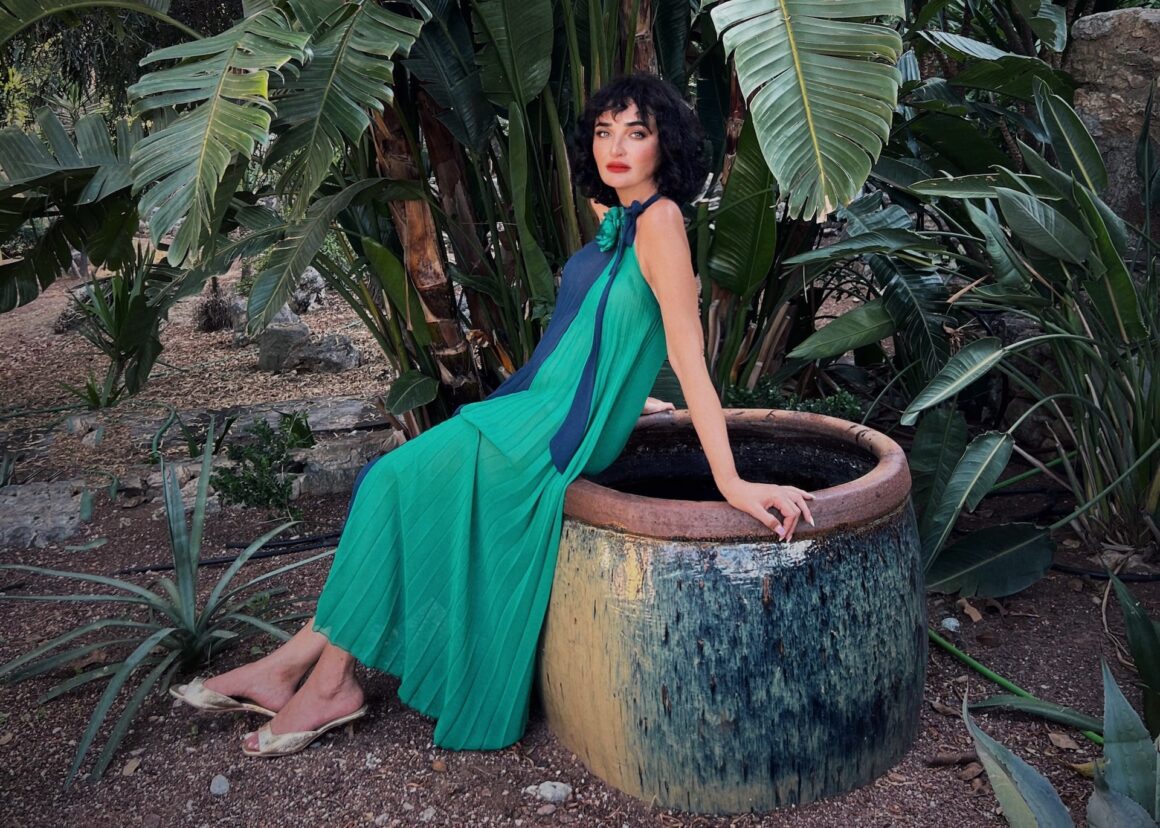
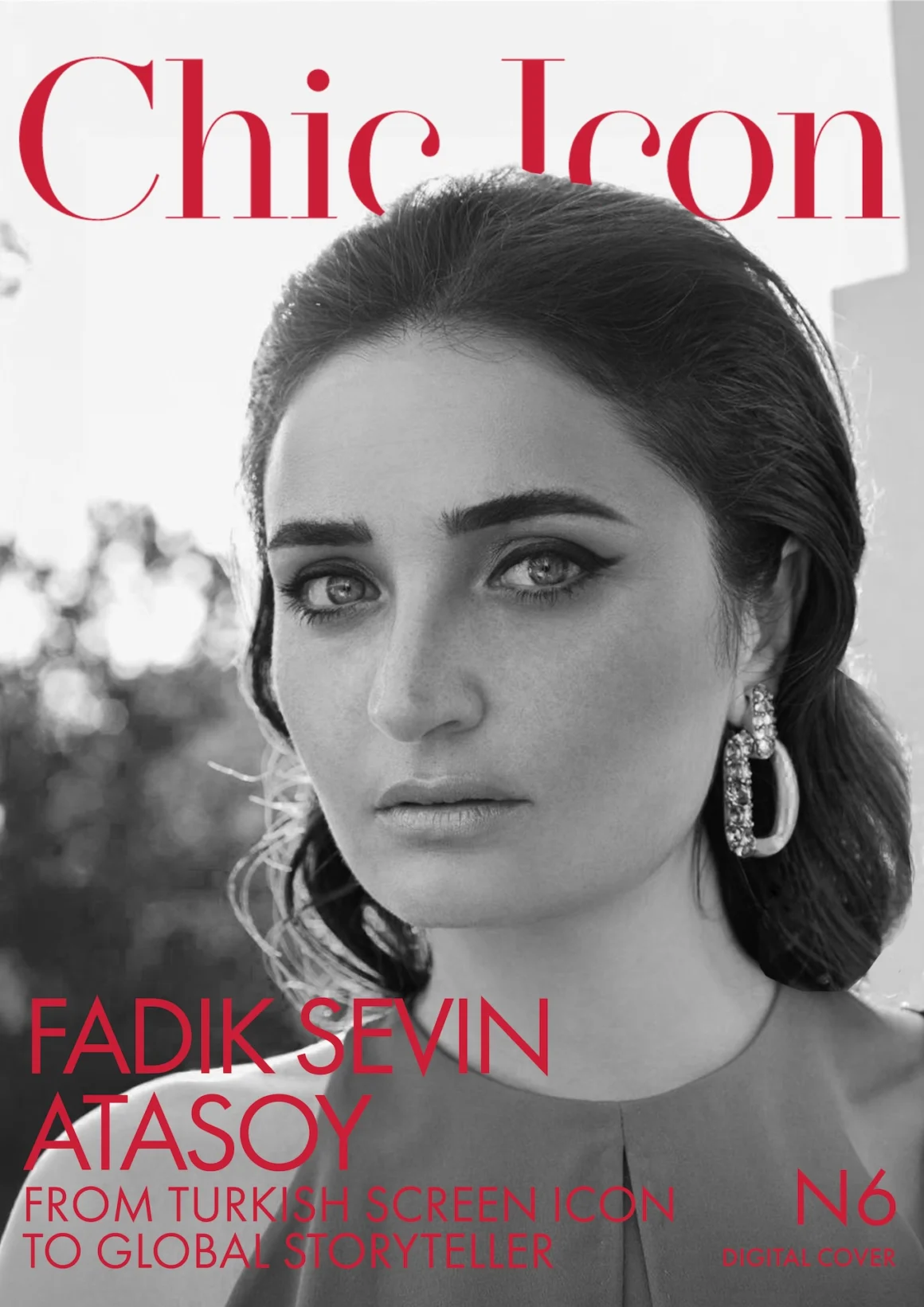
Fadik Sevin Atasoy is an artist who has always existed beyond a single definition. Celebrated for her remarkable performances on screen and stage, she has built a unique creative identity as an actress, writer, director, and storyteller whose work transcends borders and disciplines.
Born into a family deeply connected to the arts, Atasoy grew up surrounded by theatre, performance, and creativity. Over the years, she has become one of Türkiye’s most distinctive artistic voices, captivating audiences with roles that reveal the complexity of human nature. Her portrayal of Şengül in the internationally successful television series Kardeşlerim introduced her to millions of viewers around the world, with the series reaching audiences in more than 120 countries. Yet her artistic journey extends far beyond acting. From her acclaimed one-woman musical Muse to her directorial debut Juliet, Atasoy continues to explore new forms of storytelling where cinema, theatre, literature, and technology intersect.
For this month’s cover story, Chic Icon celebrates Fadik Sevin Atasoy not only as an acclaimed actress, but as a visionary artist constantly redefining what it means to create. In an exclusive interview with Chic Icon Editor-in-Chief Alina Dyachenko, Atasoy reflects on her creative evolution, the power of authentic storytelling, the importance of cultural dialogue, and her belief that art’s greatest purpose is to bring people closer to themselves and to one another.
Chic Icon: Defining you solely as an actress no longer seems sufficient. Between acting, writing, and directing, which creative role makes you feel the most free?
Fadik Sevin Atasoy: Freedom doesn’t come from choosing one discipline over another—it comes from moving between them. I’ve never believed storytelling belongs to a single medium. Acting, writing, and directing constantly reshape one another.
Acting taught me surrender. Writing taught me to listen. Directing taught me how to hold an entire world together. Every project begins with an idea I want to inhabit, and only by stepping inside it do I discover what I’m really searching for. That’s where the freedom lies.
Chic Icon: Do you discover more about yourself while creating a character or while bringing one to life?
Fadik Sevin Atasoy: Characters are never masks for me. They allow me to meet parts of myself I might not otherwise have the courage—or language—to explore.
Şengül in Kardeşlerim came from a world completely different from mine, yet beneath that I found emotions that felt deeply familiar. At the opposite extreme was Muse, a surreal being from the Planet of Arts who asked profoundly human questions about creativity and purpose.
Whether the character is rooted in realism or fantasy, the process is the same. Every role becomes a mirror, and that’s why acting has always felt like discovery rather than performance.
Chic Icon: Looking back, how has your definition of success changed?
Fadik Sevin Atasoy: I’ve never measured success by fame. Recognition may come with the work, but it has never been the reason I do it.
Today, success means having the freedom to create something that feels true—to follow an idea even when there are no guarantees. It means trusting my artistic voice and continuing to evolve with curiosity rather than expectation.
Chic Icon: Muse has been with audiences for many years. What has it given you personally?
Fadik Sevin Atasoy: More than any other project, Muse shaped me as an artist.
When I first wrote it, I believed I was creating a one-woman play. Looking back, I realize I was discovering myself. The story follows a Muse whose greatest wish is to become human, and over time I understood that the play wasn’t really about inspiration—it was about curiosity, vulnerability, and what it means to be alive.
It also transformed my understanding of theatre. I reimagined the traditional Meddah through a contemporary female voice, later developing the work into a one-woman musical for which I wrote both the script and lyrics.
Performing it in English and Turkish—from Los Angeles and Edinburgh to Melbourne, Copenhagen, New York, Ankara, and Istanbul—showed me that imagination, humour, and the search for meaning transcend culture.
Chic Icon: In a world dominated by digital content, why does theatre still matter?
Fadik Sevin Atasoy: Because nothing can replace sharing time and space with other human beings.
Every performance is different because every audience is different. Theatre only truly exists through that exchange. Audiences don’t simply watch—they complete the work with their memories, emotions, and imagination.
That idea shapes everything I create today. I’m increasingly interested in experiences where people aren’t passive spectators but active participants.
In a world constantly asking us to look at screens, theatre quietly asks us to look at one another. I don’t believe that will ever lose its power.
Chic Icon: Your short film Juliet, which you wrote, directed, and starred in, recently premiered in Türkiye. How did the story begin?
Fadik Sevin Atasoy: Every project begins with an image rather than a plot.
For Juliet, it was the image of a doll abandoned on the streets of Istanbul. I kept wondering what would happen if something created to be loved suddenly found itself alone.
As I developed the story, I realized the film wasn’t really about the doll. It was about the people she encounters. Each projects their own fears, hopes, loneliness, or tenderness onto her. In that sense, Juliet becomes a mirror.
I’ve always loved fairy tales because they allow us to explore profound truths through metaphor. Juliet became my contemporary fairy tale about belonging, compassion, and human connection.
Chic Icon: Was directing a challenge after years of acting?
Fadik Sevin Atasoy: Not at all. Acting became one of my greatest strengths as a director.
As an actor, you’re responsible for one character’s truth. As a director, you’re responsible for the rhythm of the entire story—performance, image, sound, silence, everything working together.
Because I had written Juliet, I already knew its emotional world. My job wasn’t to control it, but to create an environment where everyone could contribute something unexpected.
Ironically, directing also made me a better actress. It helped me understand the bigger picture and collaborate more deeply with directors.
Chic Icon: When writing women, what do you consciously protect?
Fadik Sevin Atasoy: Their inner lives.
I’m interested in what women desire, fear, hide, and refuse to compromise. I never want to reduce them to symbols.
Whether it’s Şengül, Muse, Juliet, or the protagonist of my next project, I’m not trying to make a statement about women. I’m trying to understand an individual.
Ironically, that’s what makes those characters universal. The greatest respect you can give any character is allowing them to remain unpredictable.
Chic Icon: How has working internationally changed you as an artist?
Fadik Sevin Atasoy: It taught me that while cultures tell stories differently, emotions are universal.
Living and working across Europe and the United States—and performing in several languages—changed the way I listen. Every language carries its own rhythm, humour, and emotional landscape.
At the same time, living abroad deepened my appreciation of Turkish storytelling, from the Meddah tradition to our unique sense of poetry and humour.
The more I travelled, the more I wanted to build bridges between cultures rather than choose one over another.
Chic Icon: Having worked across Hollywood, Europe, and the Middle East, what differences stand out to you most?
Fadik Sevin Atasoy: I don’t see them as competing traditions.
Hollywood taught me the power of structure, collaboration, and stories that can travel internationally. Europe inspired me to embrace ambiguity and trust silence as much as dialogue. The Middle East excites me because it’s investing in culture while encouraging stories that are deeply rooted in local identity yet speak to global audiences.
What unites them is simple: every audience is searching for truth.
My own work has been shaped by all of these influences. Rather than belonging to one tradition, I’m interested in building bridges—creating stories that are culturally specific yet emotionally universal.
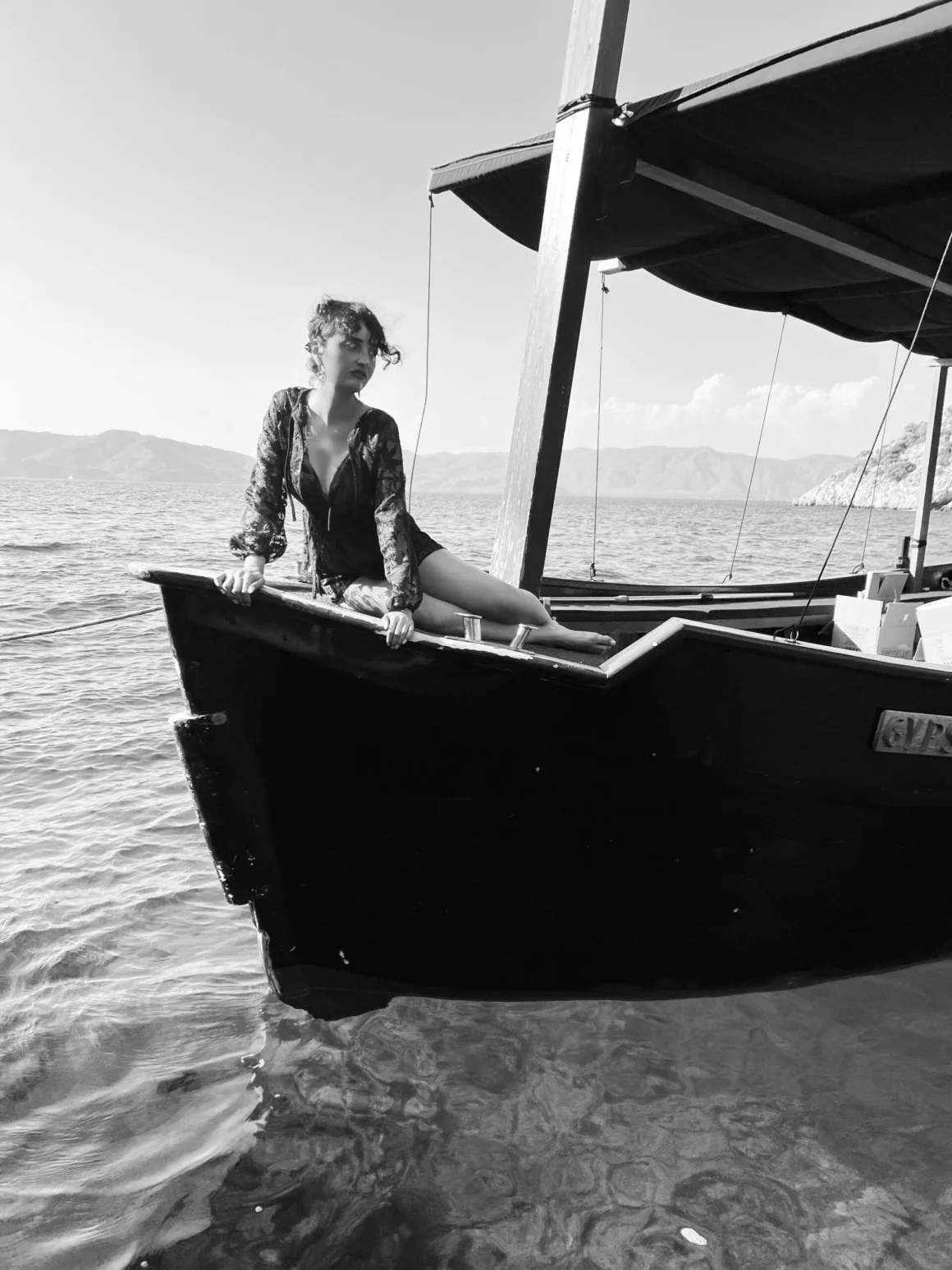
Chic Icon: In your book Fadik and the Red Suitcase, travel becomes a metaphor for an inner journey. How has travelling shaped you?
Fadik Sevin Atasoy: The book opens with a passage by Kahlil Gibran that has stayed with me for years. It reminds us that every journey begins outwardly but ultimately leads inward.
In the novel, the red suitcase is more than an object—it becomes a companion, questioning, comforting, and reflecting my inner dialogue. It reminds me that we never truly leave home behind; we carry it within us, while every place we visit leaves something of itself inside us.
Living and working in different countries has shown me that although cultures differ, the emotional experience of being human is universal. Travel has transformed my inner world far more than my understanding of geography. What stays with me aren’t landscapes, but conversations, unexpected encounters, and quiet moments that change how I see myself.
Every meaningful journey asks not, “Where have I been?” but “Who have I become because I went?”
Chic Icon: The Middle East is investing heavily in culture and the arts. What opportunities does that create for artists?
Fadik Sevin Atasoy: I find this moment incredibly inspiring because it reflects a growing belief that culture belongs at the centre of society’s future.
Visiting AlUla was unforgettable. Experiencing Desert X there felt as though the landscape itself had become part of the artwork. Contemporary art, ancient history, and the silence of the desert existed in conversation with one another.
While filming a perfume campaign there, I realized the location wasn’t simply a backdrop—it became part of the storytelling itself.
The experience reinforced something I deeply believe: the more rooted a story is in its own culture, the more universally it can resonate.
I hope this cultural transformation continues to create opportunities for artists willing to experiment, because great art grows from curiosity, not simply larger budgets.
Chic Icon: Was there ever a moment when you considered giving up?
Fadik Sevin Atasoy: Honestly, no.
Art has never felt like a career choice—it has always felt like my nature.
I grew up in a family where creativity was part of everyday life. My father was an actor, writer, and director. My mother is an actress and theatre director. My brother is a classical ballet dancer. Storytelling was simply the language we spoke.
The challenge was never the work itself but learning to protect my artistic identity. There were projects I declined because they didn’t align with my values, even when they looked attractive from the outside.
I’ve learned that every “no” shapes you just as much as every “yes.”
Chic Icon: If your work could leave audiences with one lasting feeling, what would it be?
Fadik Sevin Atasoy: I hope it reminds people that life itself is a creative act.
We’re not merely spectators of our own stories—we’re constantly shaping them through the choices we make and the way we see one another.
If someone leaves my work feeling more present, more compassionate, and more open to uncertainty, I couldn’t ask for anything more.
Chic Icon: How do you see artificial intelligence changing storytelling?
Fadik Sevin Atasoy: Every technological revolution has transformed storytelling, and AI is simply the next chapter.
I’m not interested in resisting it—I want to collaborate with it thoughtfully.
In my next multidisciplinary project, AI becomes part of the artistic language rather than a replacement for human creativity. I’m fascinated by how it challenges our ideas of authorship and participation while leaving the emotional core unmistakably human.
Technology will continue to change the way we tell stories, but empathy, imagination, and our desire to connect will always remain at the heart of them.
Chic Icon: How do acting, writing, and directing continue to influence one another?
Fadik Sevin Atasoy: To me, they’re simply different ways of asking the same question.
Acting teaches empathy. Writing teaches reflection. Directing teaches perspective.
Together, they continually reshape how I tell stories and how I understand the world.
Chic Icon: If there were no limitations, what project would you create?
Fadik Sevin Atasoy: I wouldn’t dream of making the biggest project. I’d dream of creating the most transformative one.
The exciting part is that I no longer think of it as a dream—I’m already building it.
I’m increasingly interested in experiences where cinema, theatre, music, installation, and technology exist as one living artwork. I want audiences to become participants rather than observers.
If there were no limits, I’d continue developing that vision around the world, allowing every culture and every audience to shape the work in its own unique way.
Chic Icon: Şengül from Kardeşlerim has touched audiences in more than 120 countries. Why do you think she resonates so deeply?
Fadik Sevin Atasoy: Because she’s unapologetically human.
She’s flawed, funny, impulsive, loving, resilient, and fiercely protective of her family. Those contradictions make her real.
I never approached her as a villain or comic relief. My job wasn’t to judge her but to understand her.
The most moving part has been seeing audiences from completely different cultures recognize someone they know—a mother, a neighbour, a relative, or even themselves.
That experience confirmed something I’ve always believed: the more truthful a character is, the more universal they become.
Chic Icon: Ten years from now, how would you like people to describe Fadik Sevin Atasoy?
Fadik Sevin Atasoy: I hope they would say:
“Through her work, she brought hope and love into the world. She honoured what it means to be human, remained faithful in her search for truth, and stayed true—to herself, to her art, and to the people whose lives she touched.”
That is both my greatest hope and my manifesto as an artist.
Cover Photo Credit: Cem Talu; Interview Shooting Location: Ada Capra Retreat.
Read more digital cover interviews HERE