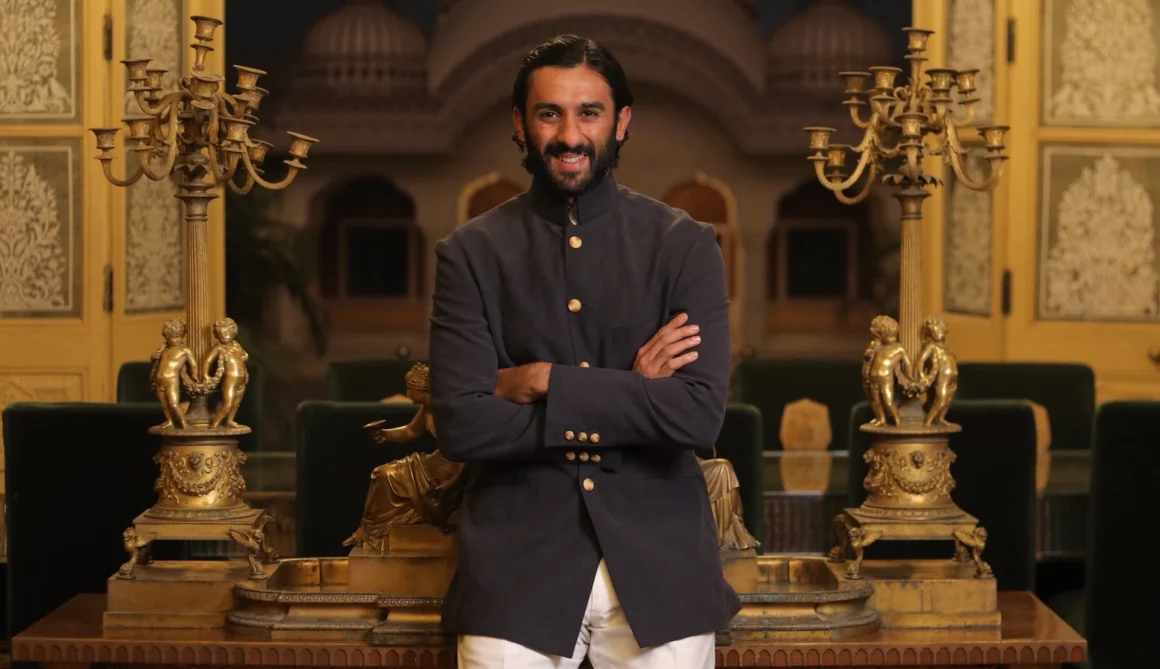
For Chic Icon’s August cover story, Editor-in-Chief Alina Dyachenko travelled to the magnificent City Palace in Jaipur for an exclusive audience with His Highness Maharaja Sawai Padmanabh Singh. Set within the royal residence that has been home to the Jaipur family for centuries, the conversation explored heritage, leadership, creativity, and the evolving role of royalty in the twenty-first century.
What follows is an exclusive conversation for Chic Icon—a rare opportunity to meet one of world’s most compelling young royal figures, whose vision is shaping the future of Jaipur while honouring its extraordinary past.
The first thing you notice isn’t the grandeur.
Yes, the marble courtyards glow beneath the Rajasthan sun. Yes, intricately painted archways frame one of India’s most celebrated palaces, where centuries of history seem to linger in every carved doorway. But what strikes you most inside Jaipur’s City Palace is something far less expected: movement.
This is not a royal residence preserved behind velvet ropes. It is a living institution. Craftsmen move between workshops. Students gather for cultural programs. Museum visitors wander through galleries while preparations are quietly underway for the next exhibition. Heritage here isn’t frozen in time—it is in constant conversation with the present.
At the center of that conversation stands His Highness Maharaja Sawai Padmanabh Singh of Jaipur.
At just twenty-eight, he inhabits a world few could imagine balancing with such ease. On one day, he may be competing in international polo tournaments. On another, attending the Met Gala. Then, almost seamlessly, he returns home to oversee cultural initiatives, heritage projects, and the future of one of India’s most historically significant royal estates.

His life unfolds across remarkably different worlds—fashion, sport, travel, conservation, entrepreneurship and ceremonial responsibilities—but every path appears to lead back to one place: Jaipur.
When I ask what it means to preserve a city built more than three centuries ago while making it relevant to a generation raised on social media and global culture, he doesn’t hesitate.
“Knowing your past,” he says thoughtfully, “preserving your past is your way into the future.”
For him, heritage isn’t nostalgia. It isn’t about resisting change. Quite the opposite.
“As important as it is to move into the future, it’s equally important to respect where you come from—your roots, your traditions, your culture, both tangible and intangible.”
It is an idea that quietly defines almost everything he does.
Rather than treating the family’s extraordinary collection of palaces, museums and historic properties as relics, he speaks about them almost like living organisms—places that must continue evolving if they are to survive.
“Our responsibility is to keep them relevant and encourage younger people—not only from India but from around the world—to engage with them.”
It is a particularly ambitious mission in one of the world’s youngest nations.
“What young people think, do and care about is incredibly important,” he says.
When Jaipur was founded in 1727 by the visionary ruler Maharaja Sawai Jai Singh II, it was conceived not merely as a capital but as a laboratory of creativity—a place where artists, jewelers, textile makers, architects and craftsmen could live, collaborate and innovate.
Three hundred years later, that original vision is finding new life.
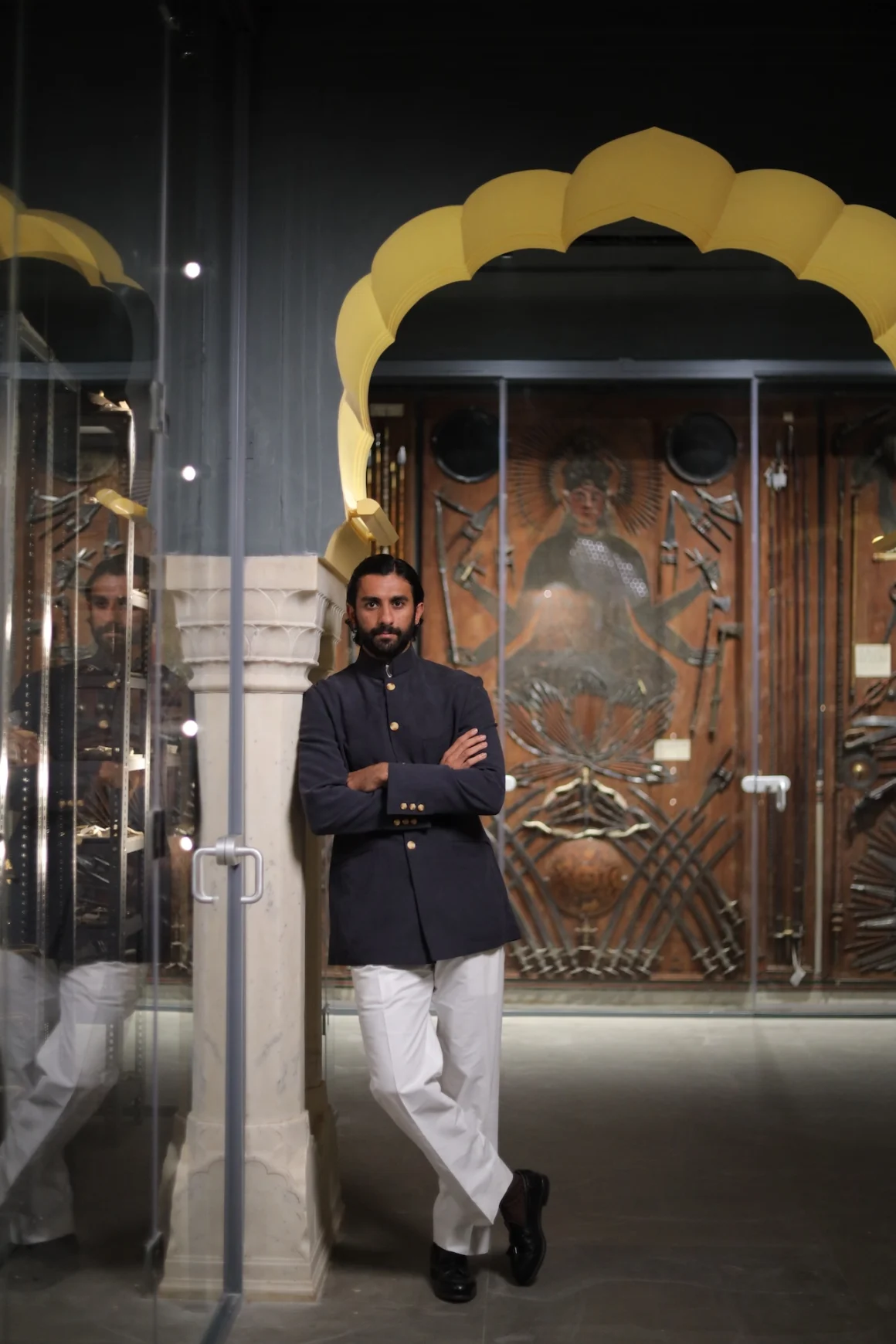
One example is the Palace Summer Camp, an initiative designed to reconnect younger generations with the city’s traditional crafts.
“When Jaipur was built, there were thirty-six ateliers—specialized workshops representing different crafts and artistic disciplines. Through the summer camp, we’re trying to revive as many of those traditions as remain relevant today.”
The programs range from craftsmanship and design to music, performance, literature and theatre. Throughout the year, the palace also hosts festivals, museum talks and artisan initiatives that invite the public inside what was once an exclusively royal space.
The goal isn’t simply preservation.
It’s participation.
“I recently attended the Met Gala,” he recalls with a smile. “The theme celebrated the idea that fashion is art. I remember thinking—in Jaipur we’ve believed that for the last three hundred years.”
The remark feels less like a criticism than a reminder that some of today’s most celebrated ideas have remarkably deep roots.
Walking through Jaipur today, it’s difficult not to notice another transformation.
The Pink City has long been celebrated for its palaces and bazaars, but it has quietly emerged as one of India’s most exciting culinary destinations. Returning after nearly a decade, I found a city increasingly defined by intimate restaurants, thoughtful design, and chefs who treat regional cuisine with the same reverence once reserved for royal kitchens.
“The best way to understand Jaipur is to walk through the old city,” he says.
Its perfectly ordered streets—among the earliest examples of urban planning in India—still reveal themselves through food.
“Every street has its specialty. One is famous for jalebis, another for something entirely different. Food tells the story of the city.”
Ironically, his own relationship with Rajasthan’s famously indulgent cuisine requires discipline.
As an international polo player, fitness comes first.
“I have to stay away from jalebis more often than I’d like,” he laughs.
That balance between tradition and reinvention inspired one of his ambitious hospitality projects: Sarvato, the seasonal fine-dining restaurant inside the City Palace.
Rather than offering familiar luxury, the restaurant was conceived as an exploration of Rajasthan itself.
Each tasting menu takes guests on a journey across the state, introducing forgotten ingredients, regional cooking techniques and recipes drawn from diverse local traditions—all accompanied by panoramic views over the palace.
“We wanted to create something you couldn’t experience anywhere else. The goal was to raise the culinary experience of Jaipur to another level.”
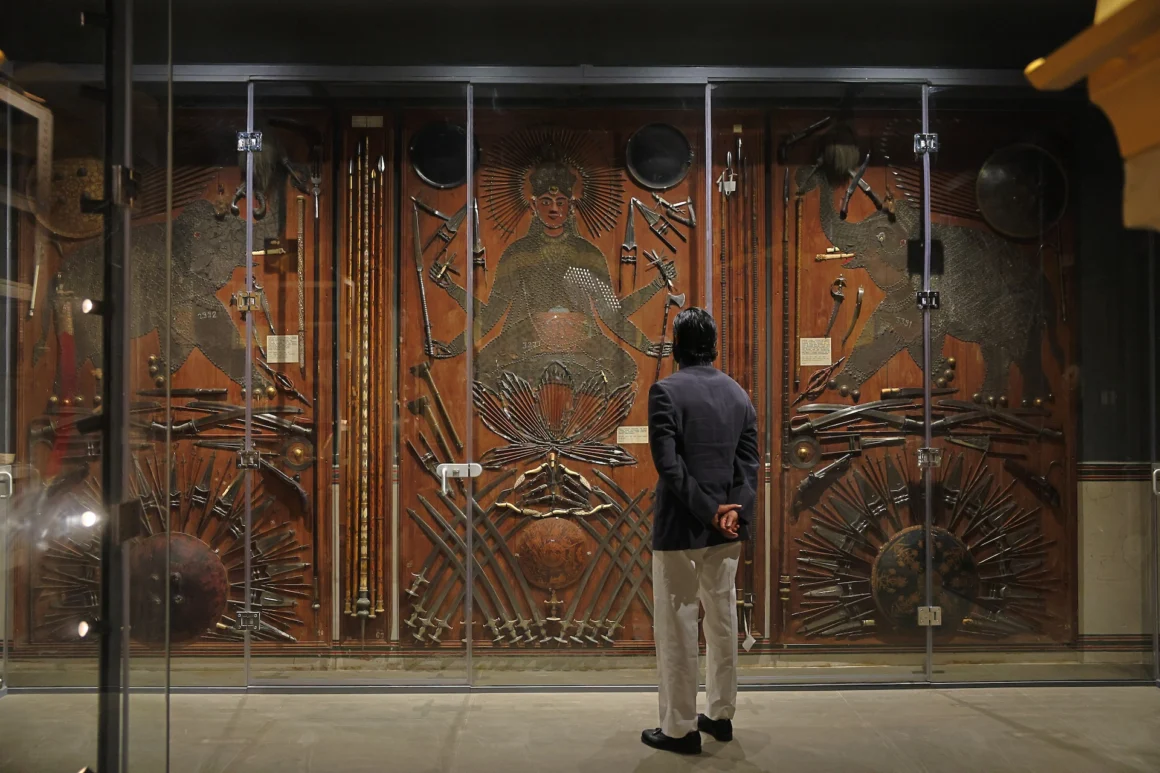
The project perfectly illustrates a philosophy increasingly shaping both Jaipur and its young Maharaja: heritage should never become a museum piece.
It should continue creating new memories.
The story of Jaipur today is not only about preserving what has been inherited. It is about imagining what comes next.
For Maharaja Sawai Padmanabh Singh, the future of heritage depends on its ability to remain alive, relevant and connected to the wider world. His vision extends beyond the palace walls—not only preserving Jaipur’s identity, but positioning the city as a place where creativity, innovation and cultural exchange can flourish.
When asked what he wishes the international community understood better about Jaipur, his answer returns to the original spirit behind the city’s creation.
“Jaipur today is a place that almost everyone who comes to India visits. People land in Delhi, go to Agra, and then most of them come to Jaipur. But I hope that people begin to see it as more than a three- or four-day stop on their journey.”
For him, Jaipur was always meant to be more than a destination.
The city’s founder envisioned a place where people from different backgrounds could come together, settle, create and contribute.
“We already have many internationals who are moving to Jaipur, particularly people working in creative fields. I hope that in the future more people will see the incredible opportunities that exist here—to work with artists, craftsmen and artisans, and to create something meaningful.”
His ambition is not simply to attract visitors, but participants.
A city’s culture becomes truly sustainable when people engage with it—not only observe it.
While his own focus remains firmly on Jaipur, he also sees the importance of reconnecting the city with its natural environment. One of his current projects reflects this broader understanding of preservation: the creation of a large ecological park on one of the family’s properties near Jaipur.
“The idea is to revive some of our native flora and fauna, especially species that are becoming increasingly rare, and restore a healthy ecosystem.”
It is a project that reflects a different kind of heritage—one that belongs not only to architecture and craftsmanship, but also to the natural world.
Yet perhaps what makes Padmanabh Singh’s perspective most unusual is the number of different identities he carries simultaneously.
He is a custodian of a centuries-old royal legacy, but also a young man of the modern world. He is a professional polo player, a fashion enthusiast, an entrepreneur, a traveller and a cultural ambassador.
“I think I have many lives,” he says.
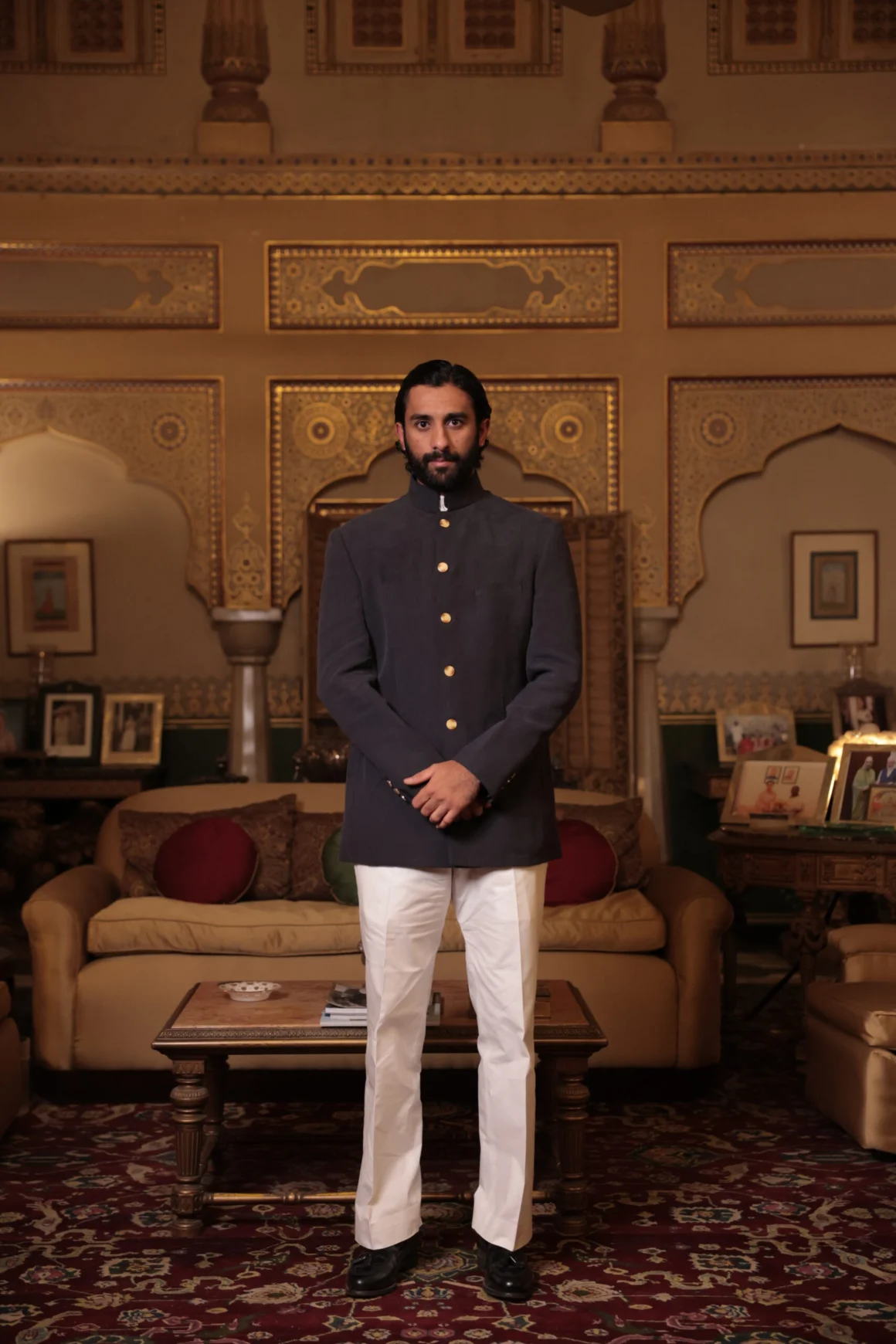
“There is my life in Jaipur, my life when I travel, my professional life in polo, my ceremonial responsibilities here, and my connection with fashion.”
Rather than seeing these worlds as separate, he sees them as complementary.
For him, curiosity is one of the most valuable qualities a person can possess.
“We are lucky to live in a time when the world is at our feet. You can take a flight and be on the opposite side of the world. There are so many opportunities.”
His advice to younger generations is simple: explore.
Too many people limit themselves because they are afraid of making mistakes.
“I think people should be more open to taking opportunities, travelling, trying things they haven’t done before and experimenting with their work. Don’t hold yourself back because of the fear of failure.”
When asked about a dream adventure he has yet to experience, his answer is not a traditional luxury escape, but something far more ambitious: a journey across continents.
“I would love to drive from the north of Europe to the south of Africa, then return through the other side of Africa and back to Europe. It would be such an incredible adventure. You would see so much of the world.”
Travel, for him, is not about collecting destinations. It is about understanding perspectives.
Although Rajasthan remains the place closest to his heart, he speaks warmly about France, where he spends summers playing polo and reconnecting with friends.
“I love France. I love the sea. Those are some of my favourite places.”
But even as Jaipur looks increasingly outward, his attention remains focused on creating a sustainable future for the city he represents.
One of the areas where he sees enormous potential is hospitality.
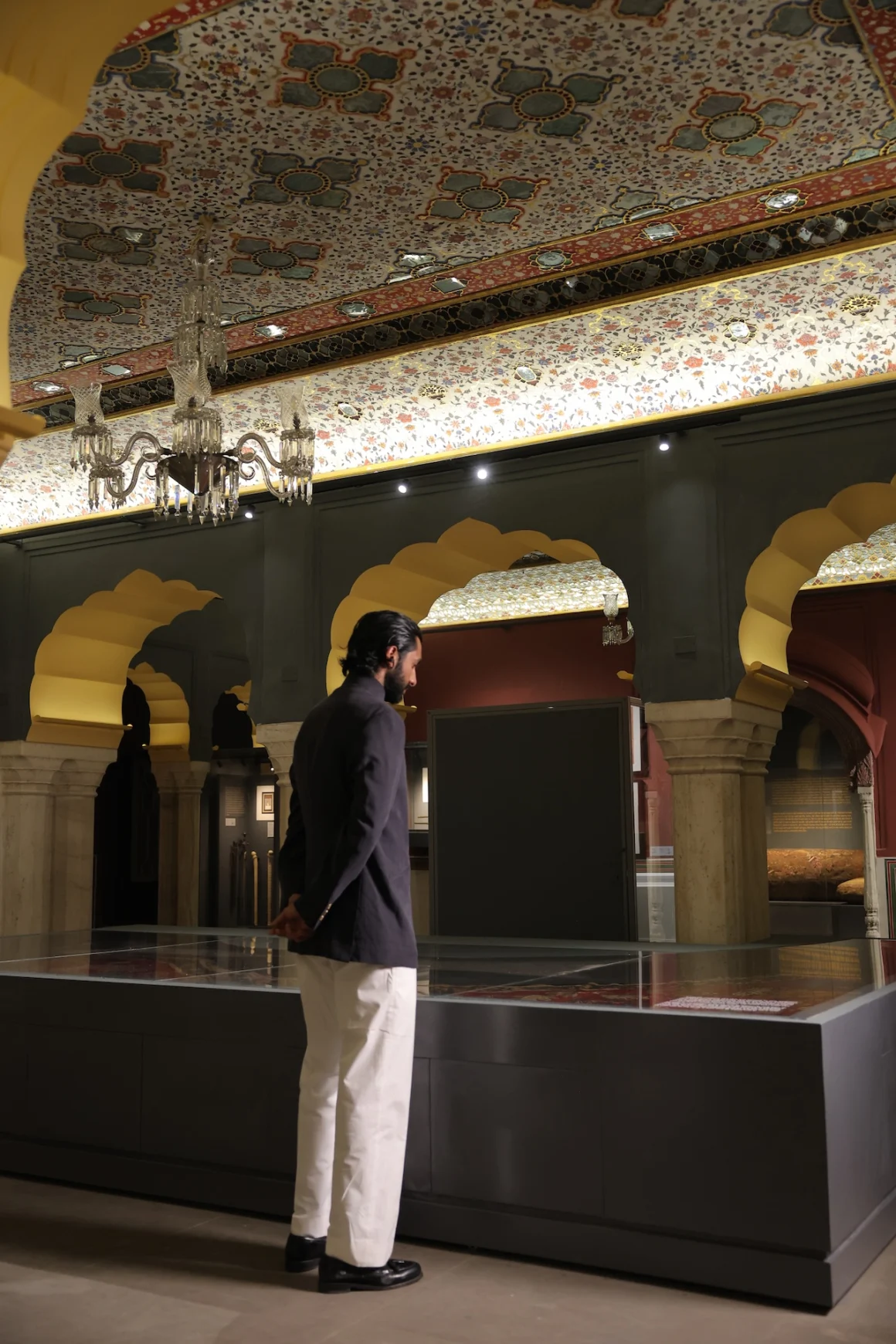
Across India, historic palaces and heritage buildings are being given new life through thoughtful restoration and adaptive reuse. For Padmanabh Singh, this is not only an opportunity—it is a responsibility.
“Heritage monuments cannot simply remain untouched. They need a purpose. They need to continue living.”
Hospitality, he believes, provides one of the most effective ways to achieve that balance.
“It allows people responsible for heritage to preserve these incredible places while also creating employment and generating income for communities.”
The same philosophy guides his approach to collaborations with global brands.
In an era where partnerships are often driven by visibility alone, Padmanabh Singh places importance on something deeper: shared values.
One of his most significant collaborations is with the United States Polo Association, a relationship built around a mutual passion for the sport.
“At the heart of that collaboration was the love for the horse and the love for polo.”
For him, the strongest partnerships happen when there is genuine alignment—not simply commercial interest.
“When there is a meeting of minds, when there is a true alignment of vision and goals, those are the collaborations that make the most sense.”
Yet when asked about the one initiative he would create if there were no limitations, his answer moves away from palaces, luxury or global recognition.
It returns to something much more fundamental.
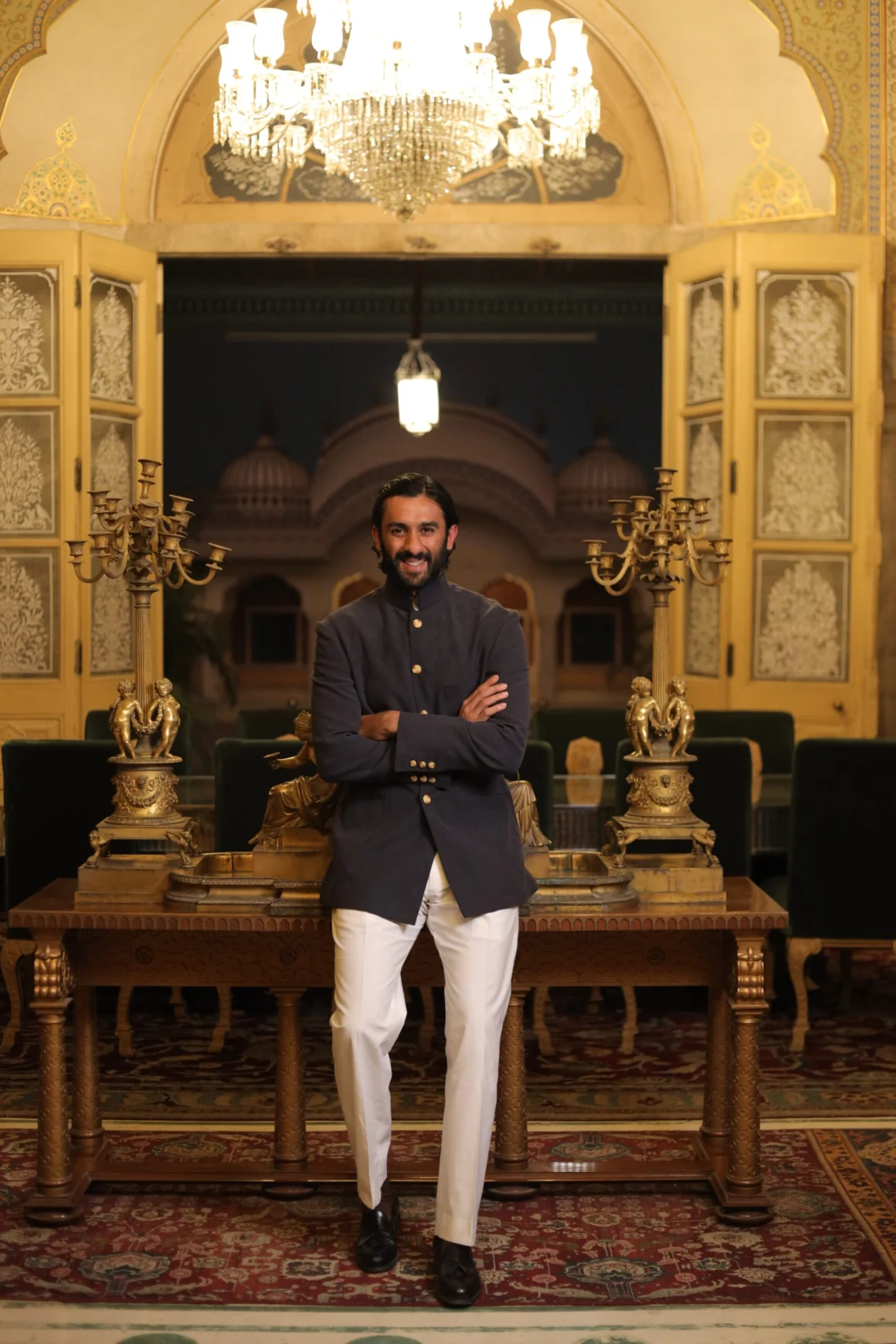
Education.
“If I could find a way to provide quality education to all children in Rajasthan, especially girls, that would be something I would truly want to achieve.”
He acknowledges that important progress is already being made, but believes there is still a long journey ahead.
“Quality education can solve so many of the problems we face.”
It is a fitting reflection of the philosophy that defines him.
A young Maharaja looking toward the future, while carrying the responsibility of the past.
For Padmanabh Singh, legacy is not measured only by the monuments left behind. It is measured by the people inspired, the traditions preserved, and the opportunities created for those who come next.
Jaipur’s greatest treasure may not only be what it remembers.
It may be what it becomes.
Read more digital cover interviews HERE