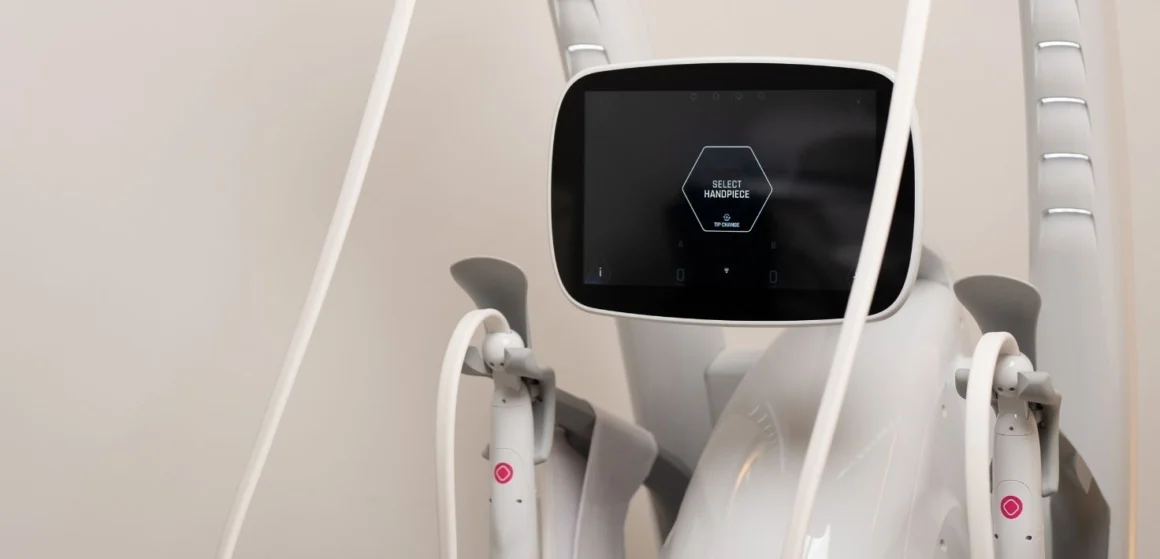
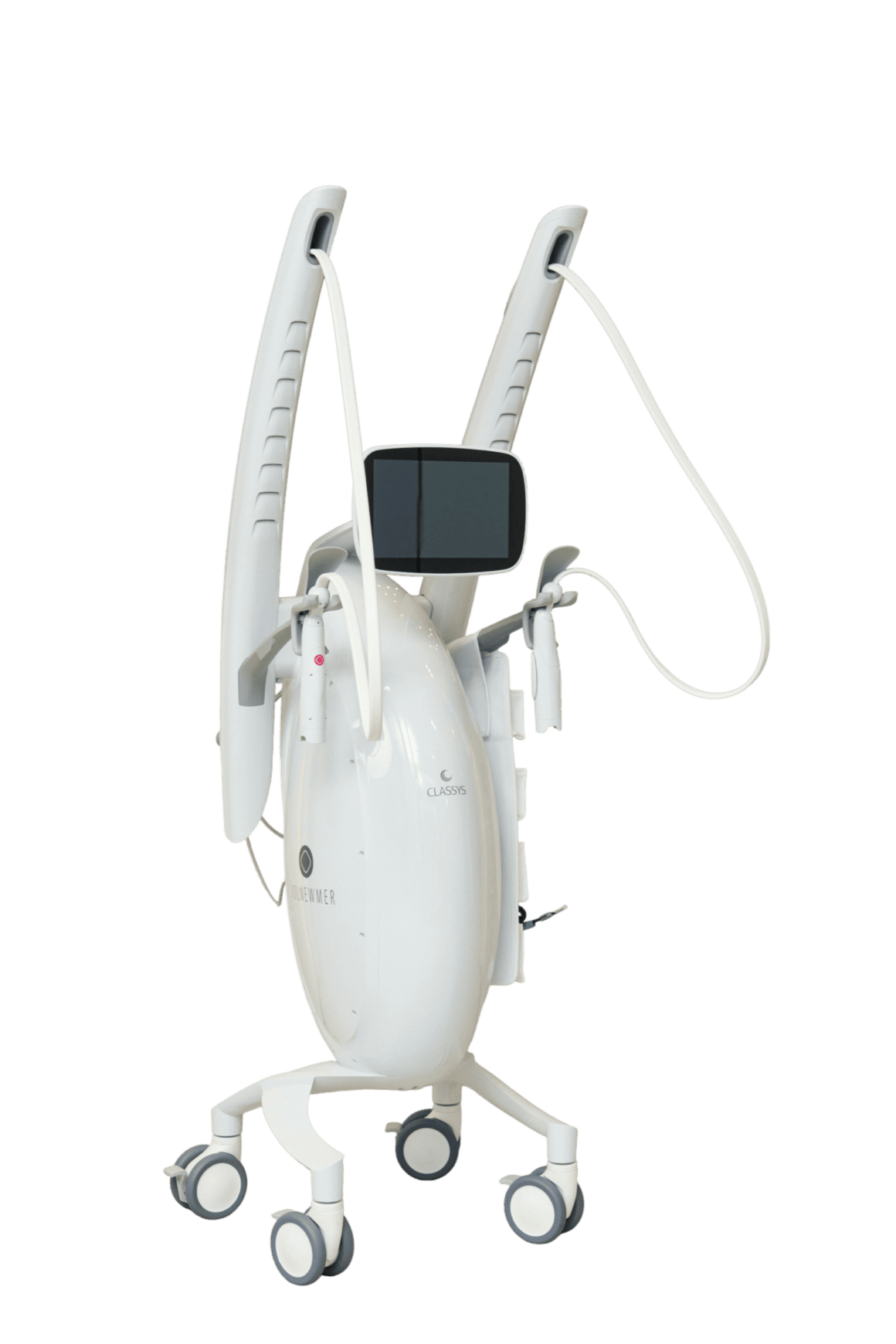
For years, the conversation around facial rejuvenation has been divided between two extremes: injectables that subtly alter the face and surgery that changes it decisively. Now, a new generation of energy-based treatments is proposing a different middle ground. Among them is Volnewmer, a non-invasive monopolar radiofrequency treatment designed to tighten the skin, stimulate collagen and subtly redefine facial contours.
But can it really stand in for a facelift? The short answer is: for some people, it may offer a meaningful non-surgical alternative — but it cannot fully replicate surgery.
Volnewmer works by delivering 6.78 MHz radiofrequency energy into the skin and underlying tissue. The controlled heat causes contraction of existing collagen fibres while stimulating longer-term collagen remodelling. Continuous cooling protects the surface of the skin during treatment. The result is a two-stage effect: an initial sense of firmness followed by gradual improvement in texture and tightness as collagen continues to remodel.
Clinical research on Volnewmer is still relatively young, but the early results are encouraging. In a study of 30 women, three-dimensional imaging demonstrated measurable lifting of the mid-face, lower face, forehead, eye area and neck immediately after treatment, with improvement still measurable one month later. Another study of 50 participants found significant improvement in skin roughness after a single treatment, with results maintained at one month.
So how often should it be done?
There is no single protocol that applies to everyone. A single session can produce visible tightening, while some patients may benefit from a planned series depending on age, skin laxity and the treatment objective. A recent study specifically investigating Volnewmer in lean-faced patients used five treatments spaced three weeks apart, but this should be viewed as a research protocol rather than a universal recommendation. For maintenance, the interval is generally determined individually, allowing the collagen-remodelling process to develop before deciding whether another treatment is necessary.
And is it safe?
Current studies suggest that Volnewmer has a favourable safety profile when performed with appropriate settings and technique. Reported reactions are generally temporary, such as redness, warmth, tenderness or mild swelling. Studies of monopolar RF, including Volnewmer, have not identified serious adverse events in the published clinical trials reviewed here. Nevertheless, RF is a heat-based treatment, and incorrect energy settings or technique can cause burns or unwanted tissue changes. Patient selection and treatment parameters therefore matter as much as the technology itself.
The final question remains the most important one. A facelift physically repositions and removes excess tissue; Volnewmer does not. It is best suited to mild-to-moderate laxity, when the goal is firmer skin and better definition rather than dramatic repositioning of facial structures.
Perhaps that is precisely where its appeal lies. Volnewmer does not attempt to replace surgery at every stage of ageing. Instead, it offers another point on the spectrum — one that works gradually, without incisions or surgical downtime, and aims to make the face look refreshed rather than transformed.
For the right patient, that distinction could make all the difference.
Read more BEAUTY articles HERE