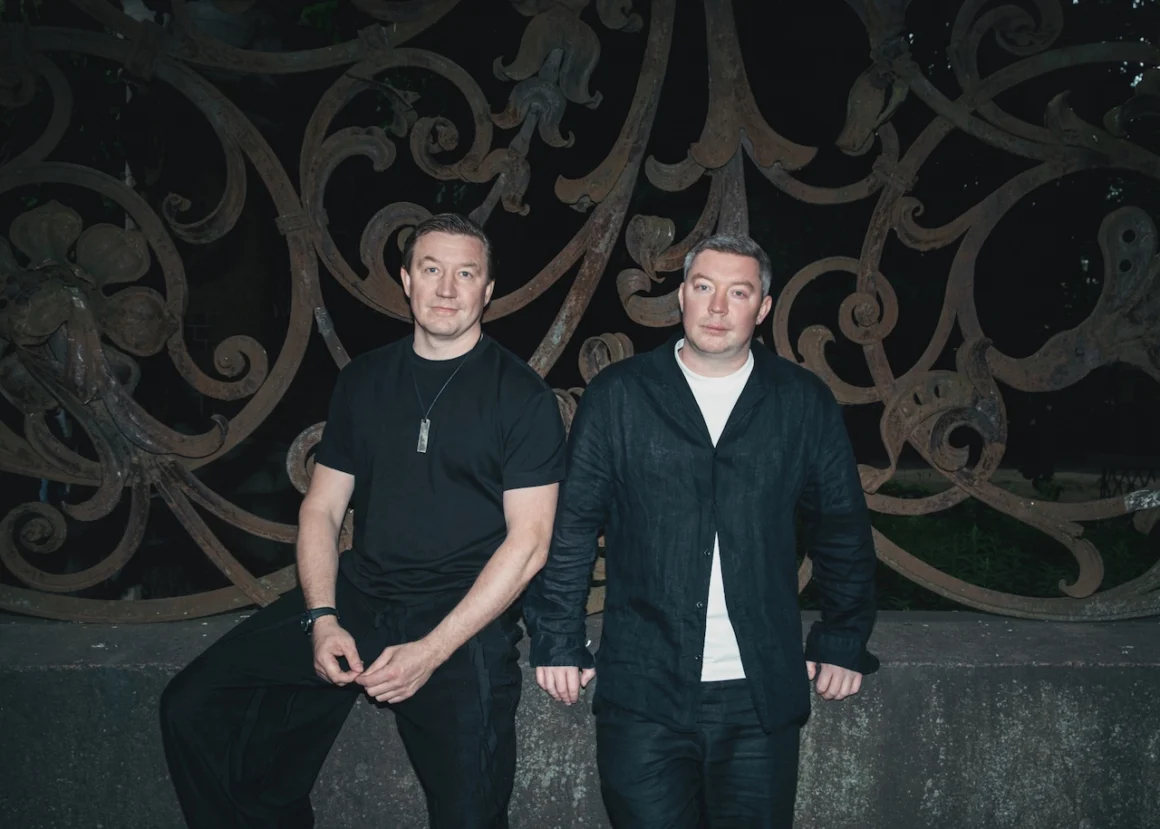
St. Petersburg has earned its reputation as Russia’s gastronomic capital—a city where a deep cultural heritage meets an instinct for reinvention. Its restaurant scene has always had a particular relationship with art, aesthetics and ideas, and today a new generation of chefs is pushing that tradition in unexpected directions. Among the city’s most distinctive names is Bourgeois Bohemians (BOBO), the restaurant founded by brothers Artyom and Alexey Grebenshchikov. Artyom leads the kitchen as chef, while Alexey oversees its pastry programme. Together, they have developed a distinctly personal approach to contemporary gastronomy, where precision and technique meet curiosity, imagination and an unapologetically creative spirit.
Since opening in 2018, BOBO has become an important destination for St. Petersburg’s culinary and creative circles. Its reputation has been recognised at the highest level: the restaurant was named Russia’s Best Restaurant by WhereToEatin both 2024 and 2025, before becoming the first restaurant in the history of the award to enter its Hall of Fame in 2026. Artyom has been named St. Petersburg’s Best Chef several times, while Alexey has been recognised as Russia’s Best Pastry Chef.
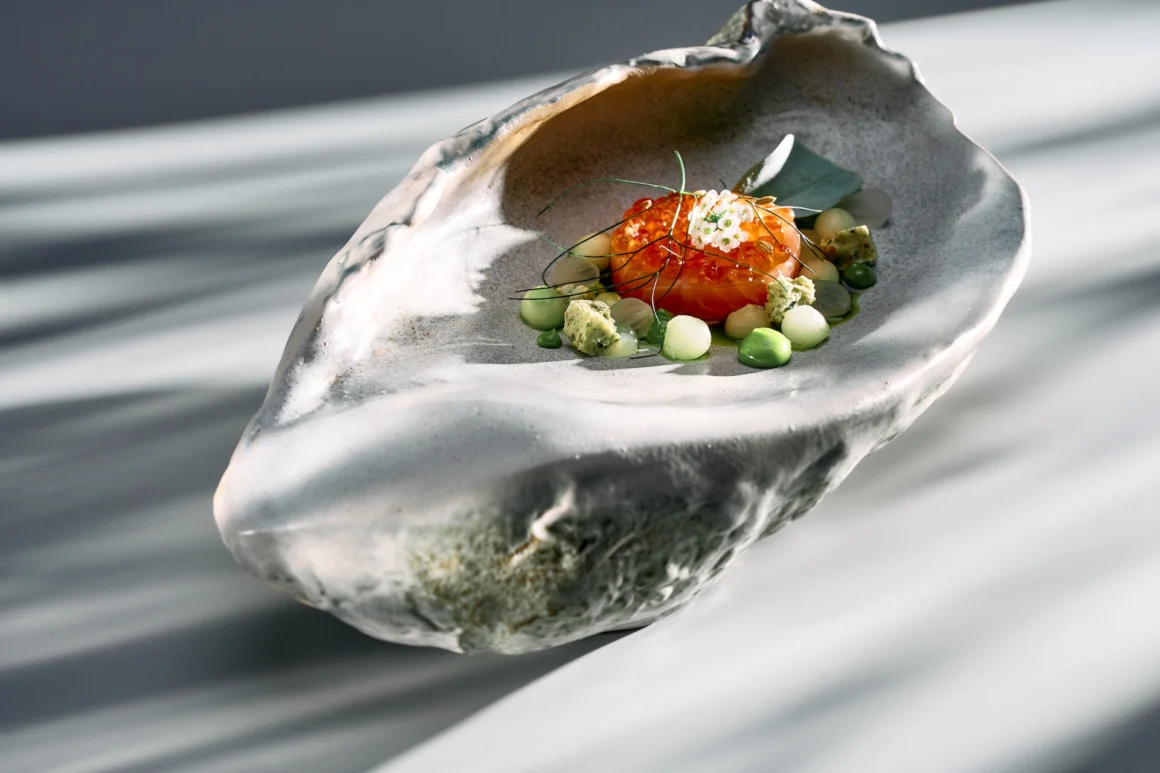
Yet the story of BOBO is ultimately less about accolades than about two brothers who use food as a form of creative expression—one that moves between flavour, emotion, aesthetics and constant discovery. Twice a year, that philosophy takes on a new form in the restaurant’s tasting menu, often developed in dialogue with contemporary artists.
The latest chapter is the XVII “Gateway to the City” set menu, an exploration of St. Petersburg through its history, culture and people. Ahead of its launch, Chic Icon sat down with Artyom and Alexey Grebenshchikov to discuss the creative process behind BOBO, the role of art in gastronomy, the transformation of familiar ingredients, and what happens when technique becomes a vehicle for an entirely personal point of view.
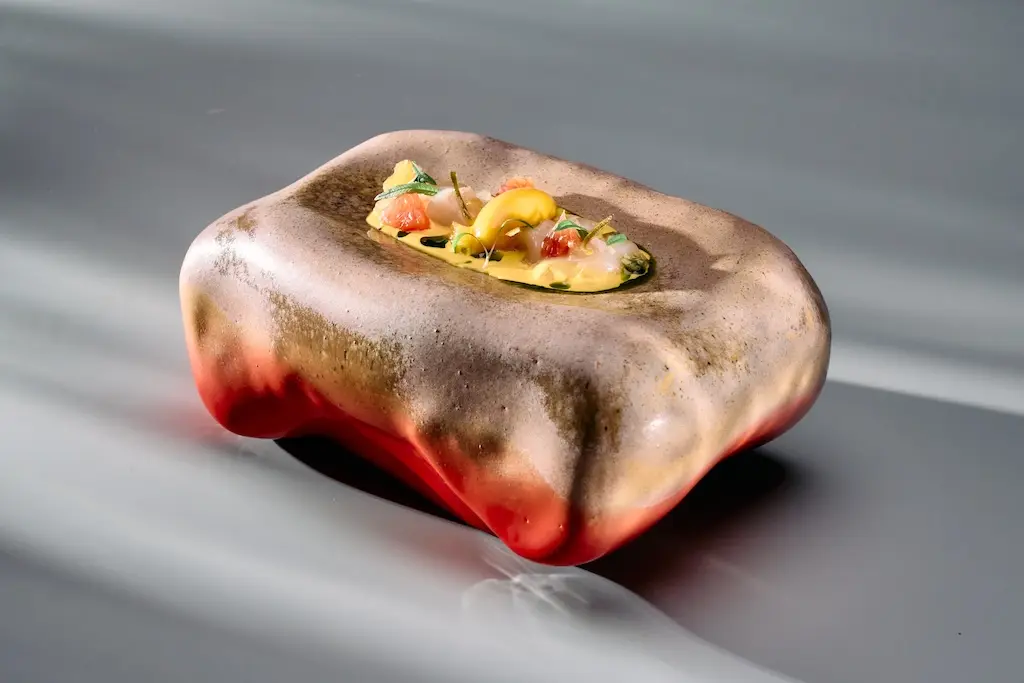
Your tasting menus have increasingly become a dialogue between gastronomy and art. When does an artistic collaboration become true co-creation?
For us, the distinction between the two disciplines is important. Alexey and I are responsible for the gastronomic concept of the menu; the artists then interpret and extend that idea through their own medium.
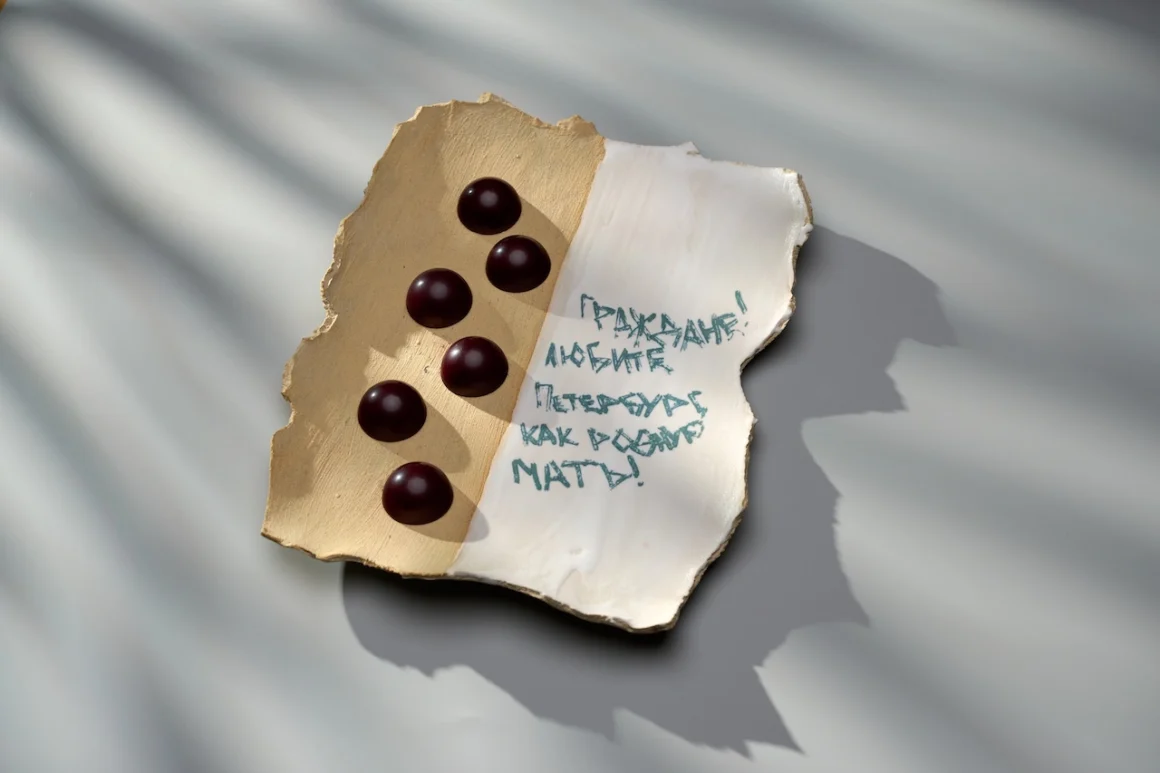
The starting point for the XVII “Gateway to the City” menu, which we refreshed this September, was St. Petersburg itself. The artists from the Kruzhok creative collective were given a common theme, but each approached the city from a completely different perspective.
That, for us, is where the real collaboration happens. We are not asking an artist to design a dish, nor are we trying to translate a particular artwork into flavour. We create the culinary language, and the artists respond to it through form, material and their own vision.
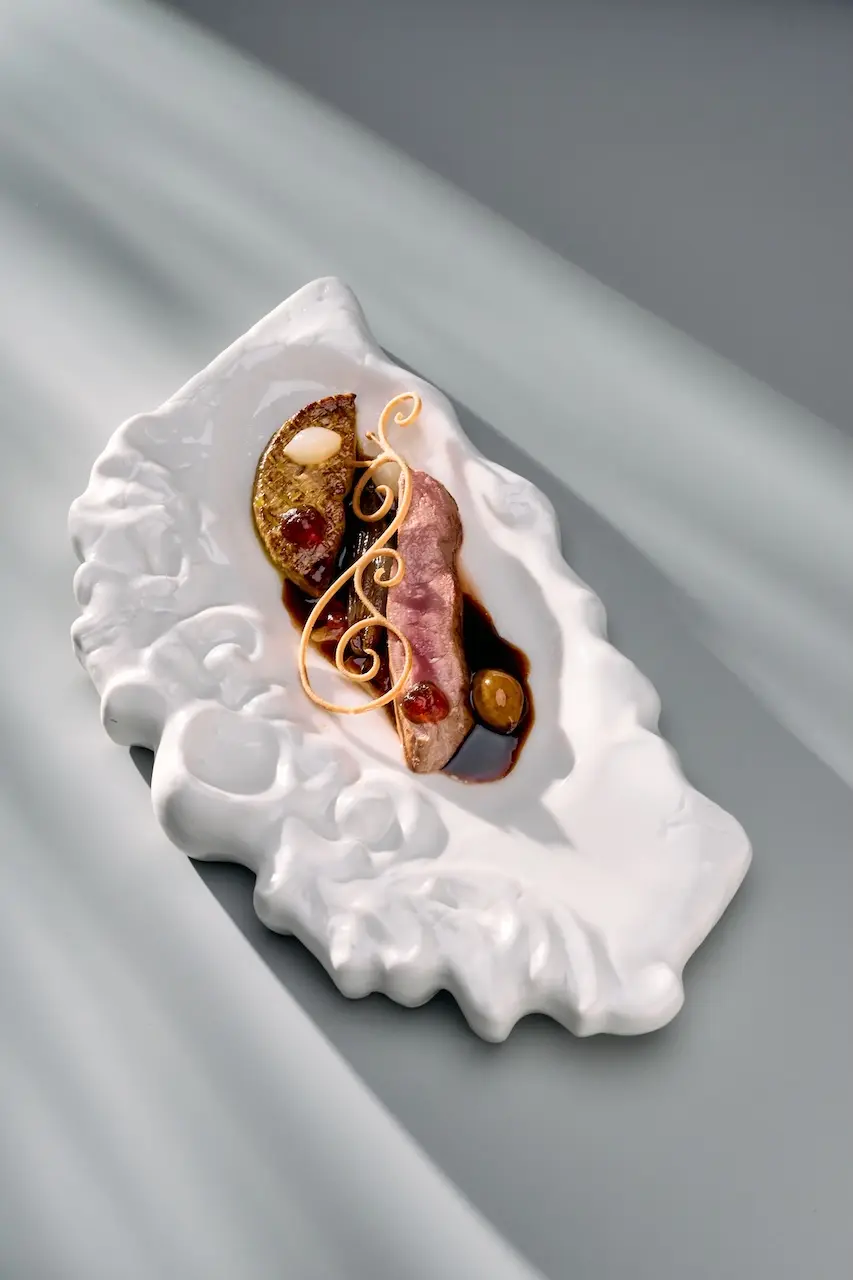
You have deliberately avoided giving the project a single visual language. What interests you about that creative tension?
The diversity is exactly what makes it interesting. Across the XV, XVI and XVII menus, we have worked with nine artists. Each has a completely different way of seeing the same theme, with their own visual vocabulary, materials and sensibility. Trying to make all of that conform to one aesthetic would defeat the purpose.
We also never alter the flavour of a dish simply to make it resemble an artist’s work. What fascinates us is seeing how one idea can be interpreted in nine entirely different ways. Each artist brings something that we could not have created ourselves, and that makes the experience of the menu much more layered.
You have worked with glass, metal, ceramics and illustration. Has that dialogue with artists changed the way you think about the dishes themselves?
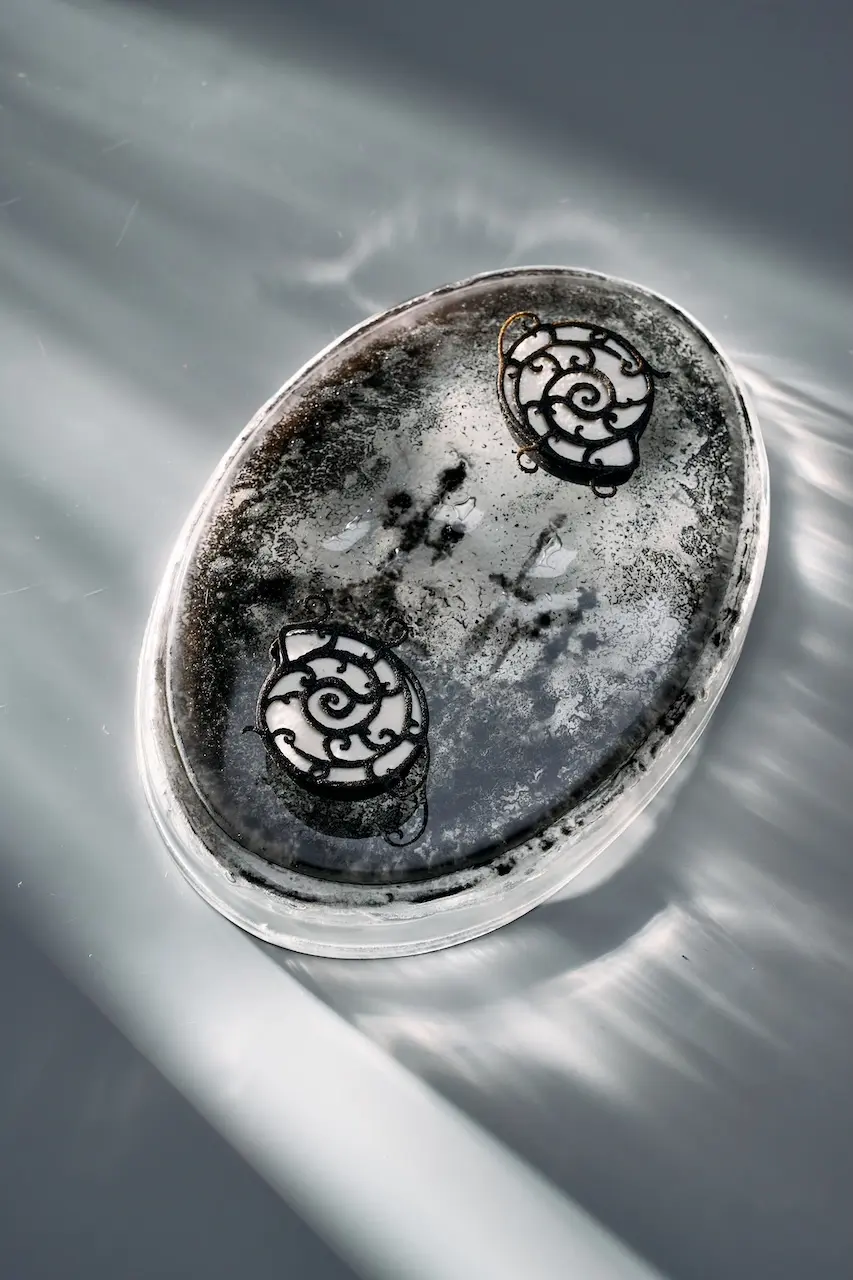
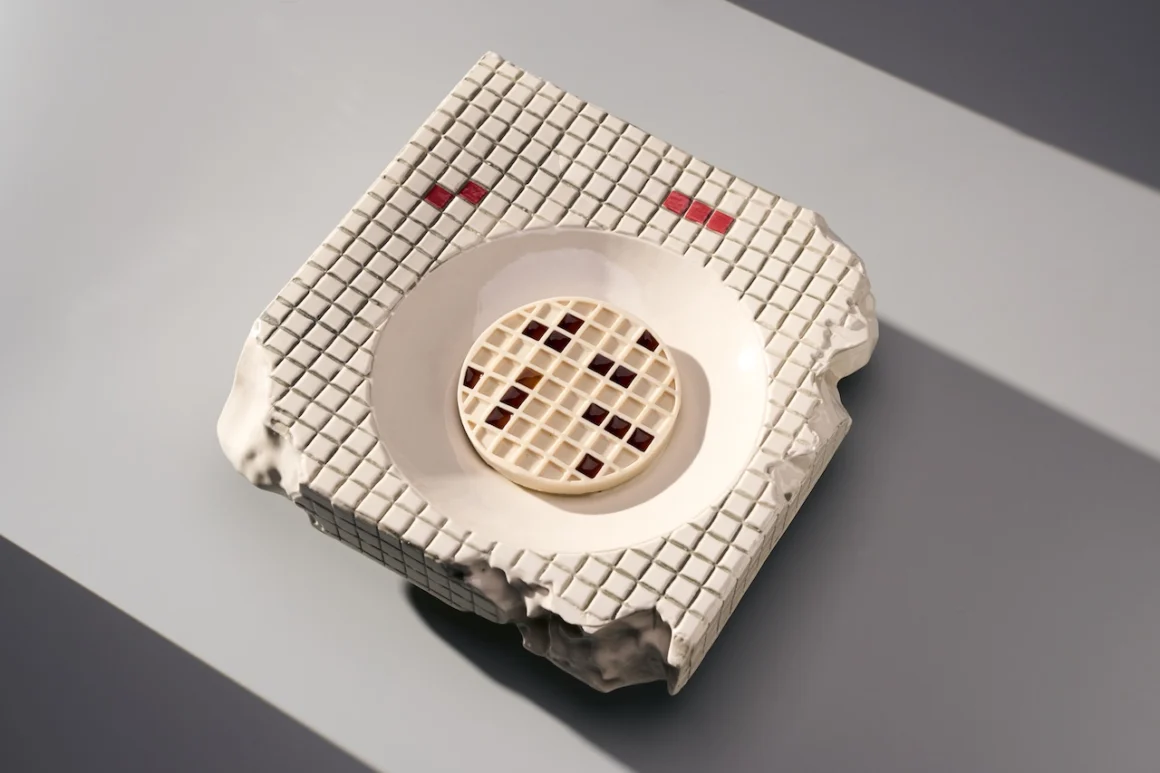
Not in the sense of making them more abstract. Our starting point is always the same: the ingredient and the flavour. Once the dish is presented, however, the food and the artwork become part of the same experience. Form, material and food have to coexist naturally and, ideally, amplify one another.
It is a two-way relationship. The artwork can make you notice something differently in a dish, introduce a new association or draw attention to a particular detail. At the same time, the artwork itself only becomes complete when the dish created for it is placed on the plate. They become one experience, but gastronomy remains the foundation.
Transformation is another recurring element in your menus. What attracts you to taking something familiar and making it unexpected?
It always begins with flavour. We like taking a familiar ingredient and asking what else it can become through technique, combinations, temperature or texture. Sometimes that process reveals an entirely unexpected side of the ingredient, but transformation itself is never the goal.
If a technique does not make the dish taste better, we simply do not see a reason to use it.
Texture plays such a prominent role in the menu. Has it become as important to your cooking as flavour?
Texture is very important to us, but I would not put it on the same level as flavour. For us, texture is a way of enhancing flavour and revealing an ingredient from a different angle.
The same ingredient can feel completely different depending on its temperature, density, crispness or creaminess. We explore those contrasts extensively, but everything ultimately has to resolve into a coherent taste.
You can create an incredibly complicated technique, but complexity on its own has no value for us.
BOBO is often described as more than a restaurant but a cultural statement. Was there a particular moment when you felt you were moving beyond gastronomy?
I would not say that we ever consciously decided to move beyond gastronomy. Gastronomy has always been, and remains, the foundation of BOBO.
What happened over time was that we realised we could broaden that language by engaging with other forms of art. That is how the collaborations with artists developed. We begin with a culinary idea, and they find their own way of extending it.
It makes the experience of a dinner richer and more dimensional. But we do not see it as moving away from the restaurant towards something else. Everything still starts with the food.
BOBO has been recognised as one of Russia’s leading restaurants. How do you maintain such an experimental, highly personal approach while keeping the experience accessible to the guest?
Experimentation has never been the objective in itself. We may spend a great deal of time working with a single ingredient, testing techniques, reworking a dish and looking for the most precise combination. But that complexity belongs in our process. It should not become a burden for the guest.
Ultimately, the guest simply needs to enjoy the food. We want to keep discovering something new without losing clarity or the fundamental pleasure of eating. That balance is probably what allows us to continue evolving.
Read more GOURMET articles HERE