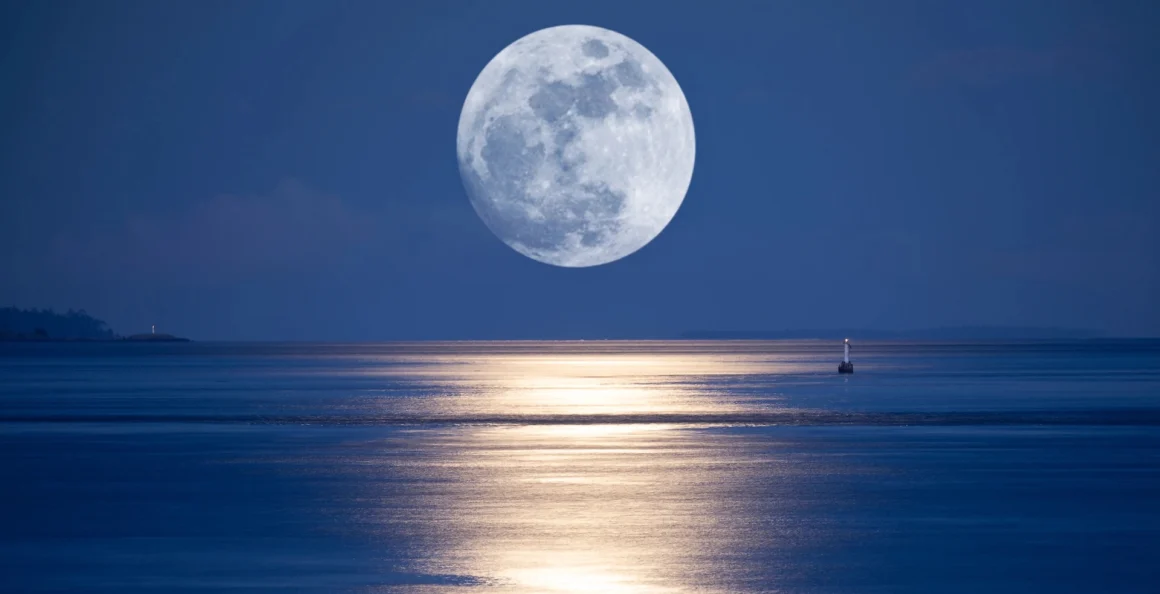
Since the beginning of human consciousness, humanity has looked toward the Moon. The ancient seers did not see Chandra merely as a celestial object reflecting sunlight. They perceived the Moon as a symbol of manas—the mind, emotion, receptivity and inner reflection. In the yogic vision, the outer cosmos and the inner cosmos are not completely separate. The rhythms of nature provide a mirror through which the practitioner learns to observe the rhythms within
For women, this symbolism became especially profound. The menstrual cycle, fertility, pregnancy, motherhood, menopause and emotional life all reveal the cyclical nature of the female body. Ancient traditions therefore developed an intimate relationship between womanhood and lunar imagery.
But there is an important distinction for the modern seeker. The Moon should not be presented as a supernatural controller of women’s physiology. The menstrual cycle is governed primarily by the neuroendocrine system—the coordinated activity of the hypothalamus, pituitary gland and ovaries. Menstrual cycles vary naturally, and the average cycle should not be treated as identical to the approximately 29.5-day lunar cycle.
Yet the ancient insight remains valuable in another sense. Women live through cycles, and the Moon gives those cycles a visible language. Modern science now tells us that light, darkness, sleep, circadian rhythms, hormones and environmental timing influence human physiology. Yoga tells us to observe prakriti, to recognize rhythm, and to cultivate sattva—clarity, balance and harmony.
When these perspectives are placed beside one another carefully, a profound philosophy emerges: the Moon may not control the woman, but contemplating the Moon can teach the woman to listen to herself.
Chandra: The Lunar Principle
In yogic and Indic traditions, Chandra is associated with the lunar principle. The Sun, Surya, represents illumination, vitality and dynamic force. The Moon, Chandra, represents reflection, receptivity, coolness, rhythm and the reflective dimension of consciousness.
This distinction can be understood symbolically through the traditional concepts of Surya and Chandra, and through the complementary energetic language of Pingala and Ida nadi. Pingala is traditionally associated with solar, activating qualities. Ida is traditionally associated with lunar, cooling and receptive qualities. These should not be confused with anatomical nerves or literal channels recognized by modern physiology. The nadis belong to the subtle-body framework of yoga.
Yet as a contemplative model, the language is remarkably useful. Every human being experiences periods of activation and rest. Focus and reflection. Exertion and recovery. Expansion and withdrawal. Wakefulness and sleep. The yogic path does not ask us to remain permanently in one state. It seeks balance. This balance is sometimes described through sattva, rajas and tamas—the three gunas of prakriti. Rajas represents activity and movement. Tamas represents inertia, heaviness and rest. Sattva represents clarity, harmony and balance. Healthy living requires understanding how these qualities move through our experience. For women, the menstrual cycle provides an especially tangible example of biological change.
The Female Body as a Cyclical System
The modern medical model explains menstruation through reproductive endocrinology. The hypothalamus, pituitary gland and ovaries communicate through hormonal signals. Follicular development occurs. Estrogen changes. Ovulation may occur. Progesterone rises during the luteal phase. If pregnancy does not occur, hormone levels change and menstruation begins. This is an extraordinary biological rhythm. Yoga approaches the human being differently. It speaks about prana, apana, agni, ojas, tejas, manas and prakriti. These terms should not be treated as direct equivalents of hormones, neurotransmitters or physiological processes.
They belong to a different conceptual system. But they offer a vocabulary for observing the relationship between body, breath, energy, digestion, mental state and consciousness. One of the great opportunities of the modern era is to hold both languages respectfully. The laboratory can measure hormone concentrations. Yoga can cultivate awareness of bodily experience. Medicine can diagnose pathology. Meditation can develop observation. Neither needs to pretend to be the other.
Is the Menstrual Cycle a Lunar Cycle?
This question has fascinated humanity for centuries. The average lunar cycle lasts about 29.5 days. Many menstrual cycles are shorter or longer than 28 days. The superficial similarity has naturally encouraged the belief that menstruation and lunar phases are biologically synchronized. Scientific research, however, has not established a universal lunar control of menstruation. Some studies have reported intermittent synchronization between menstrual and lunar cycles, while others have found limited or inconsistent relationships.
The scientifically honest position is therefore one of curiosity without certainty. The menstrual cycle is fundamentally regulated by reproductive hormones and neuroendocrine feedback. The Moon may potentially act as one environmental influence under some circumstances, but it is not scientifically justified to claim that the Full Moon determines when a woman menstruates.
The yogic perspective can offer a different insight. Rather than asking:
“Does the Moon control my menstrual cycle?” ask: “What can the Moon teach me about observing my own cycle?” That question moves from superstition toward awareness.
Moonlight and the Science of Sleep
Here the connection between lunar symbolism and modern physiology becomes particularly interesting. Human beings evolved in cycles of natural light and darkness. Today, artificial light has transformed that environment.
We can illuminate a room at midnight. Look at a phone at 2 a.m. Work beneath bright lights through the night. Sleep beside a television. Modern chronobiology demonstrates that light is a powerful regulator of circadian timing.
The brain receives information about environmental light through the eyes and uses it to coordinate biological rhythms. Melatonin secretion, sleep timing and circadian phase are all influenced by the light-dark environment. Moonlight is far weaker than sunlight, but natural nighttime illumination is nevertheless part of the environmental rhythm in which humans evolved.
This is where the ancient reverence for Chandra becomes scientifically interesting. The yogic tradition teaches awareness of the transition between light and darkness. Modern sleep science teaches the importance of respecting the biological night.
The practical conclusion is simple: Honor darkness. Reduce unnecessary artificial illumination at night. Dim the environment before sleep. Expose yourself to natural daylight during the day. Allow the nervous system to recognize that night is different from day. This may be more important for health than any ritual performed under the Full Moon.
Chandra and Manas: The Moon and the Mind
In yogic philosophy, manas is associated with the sensory mind—the aspect of mind that receives impressions, responds and fluctuates. Chandra is traditionally connected symbolically with this mental dimension. This is why the Moon has often been associated with emotional sensitivity.
Again, modern science does not establish that the Full Moon universally causes emotional instability. But psychology and neuroscience clearly demonstrate that sleep, stress, hormones, environment and expectations influence emotional experience.
If lunar observation encourages a woman to become aware of these fluctuations, it can become a contemplative practice. Every evening, ask: How is my mind? How is my breath? How is my body? What am I carrying emotionally? What does my nervous system need? This is svadhyaya—self-study. The Moon becomes an external reminder for an internal practice.
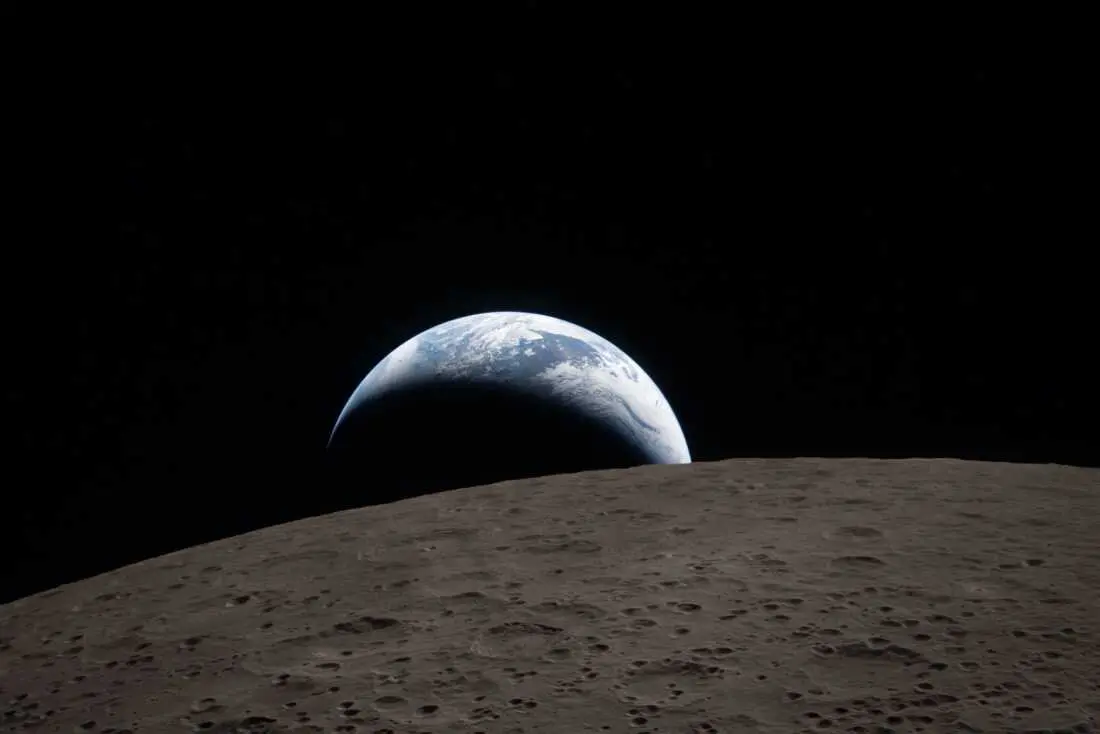
Ida Nadi and the Lunar Principle
In Hatha Yoga, the subtle body is described through nadis, channels through which prana is said to flow. Among them, Ida, Pingala and Sushumna are especially important in yogic teachings. Ida is traditionally described as lunar, cooling and receptive. Pingala is solar, heating and activating.
Sushumna represents the central channel associated with deeper states of yogic consciousness. These concepts should not be presented as anatomical structures equivalent to blood vessels or nerves. They are part of the subtle-body map of yoga. Yet they contain a powerful practical metaphor.
A woman who is constantly in rajas—constant activity, stimulation, work and mental acceleration—may benefit from cultivating qualities traditionally associated with Chandra: cooling, slowing, receiving, listening and resting. This is not because moonlight chemically changes the body. It is because the symbolic language can help create behavioral change. And behavior changes physiology.
The Four Faces of the Moon
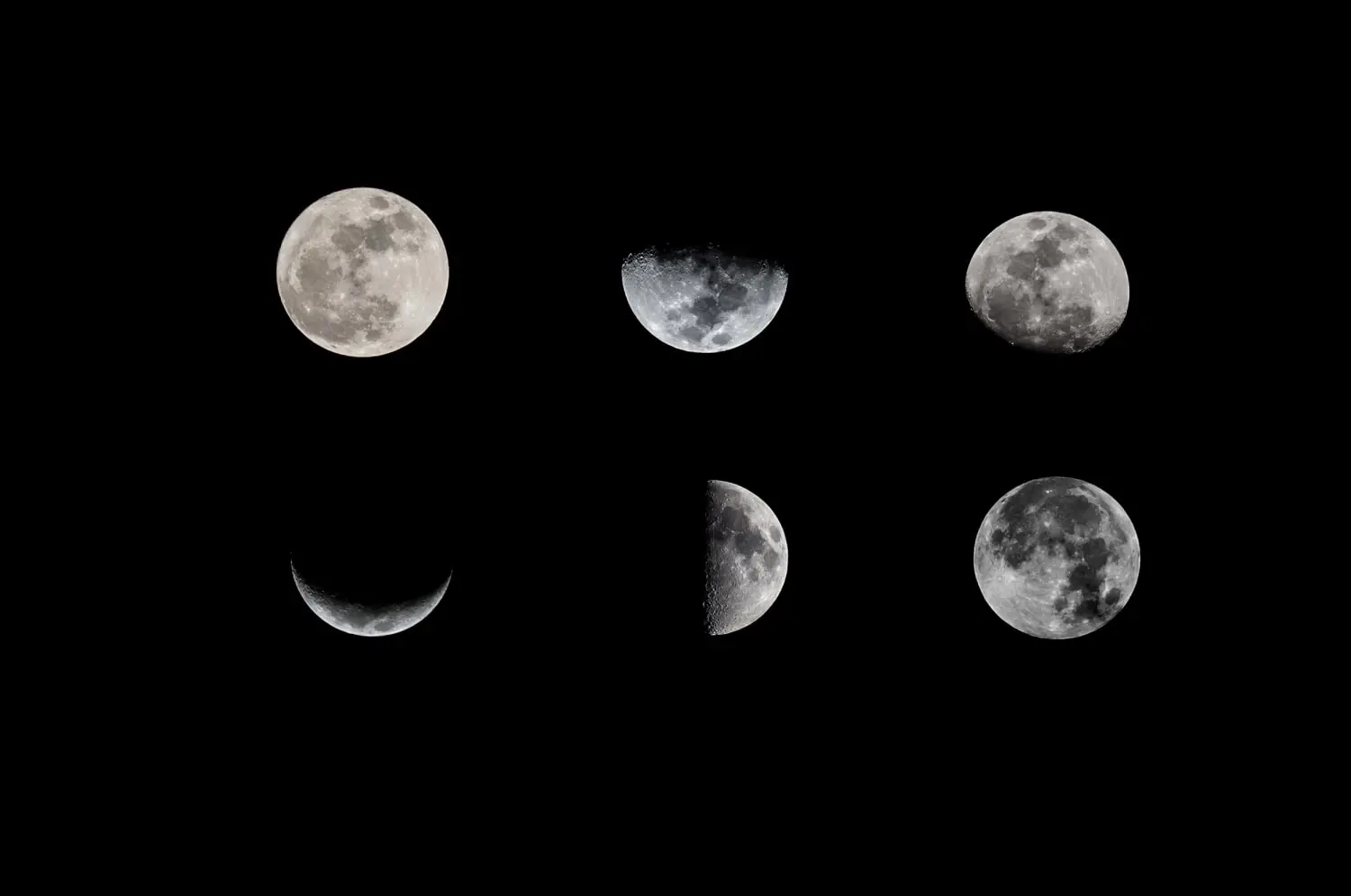
The lunar cycle can become a contemplative mandala.
Amavasya — The New Moon
The New Moon represents darkness. In a yogic interpretation, darkness need not mean something negative. It can represent pratyahara—withdrawal of the senses.
Turn inward. Reduce external stimulation. Sit quietly. Practice gentle pranayama. Journal. Ask what needs to be released before something new can begin. A simple practice is five to ten minutes of silent sitting. Close the eyes. Observe the natural breath. Do not force it. Simply witness. This is the beginning of dhyana—meditative awareness.
Shukla Paksha — The Waxing Moon
The waxing Moon traditionally symbolizes growth. This can correspond symbolically with sankalpa—a conscious intention. Choose one intention. Not ten. One. Perhaps: “I will care for my body.” “I will protect my sleep.” “I will speak with greater compassion.” “I will create time for meditation.”
Then bring the intention into action. The waxing Moon becomes a reminder: what is consciously nourished can grow.
Purnima — The Full Moon
In many Indian traditions, Purnima has deep spiritual significance. It is associated with observances, meditation, prayer and sacred gatherings. For a modern woman, the Full Moon can become a monthly period of purnata—reflection on fullness.
What has filled my life? What has exhausted me? What am I grateful for? What have I completed? What remains unfinished?
A simple practice is trataka or candle gazing, if comfortable and practiced appropriately, followed by meditation with closed eyes. The goal is not to absorb a mysterious lunar frequency. The goal is to cultivate ekagrata—one-pointed attention.
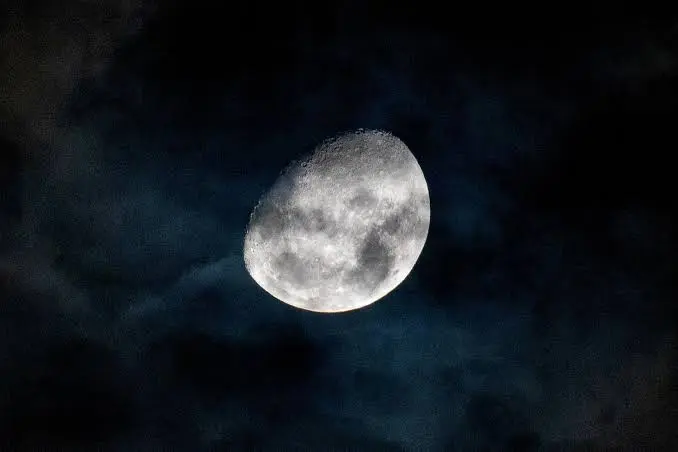
Krishna Paksha — The Waning Moon
The waning Moon teaches another lesson: Release. Modern culture celebrates accumulation. More possessions. More achievements. More information. More commitments.
Yoga asks another question: what can you let go of? This is the psychology of vairagya—non-attachment. During the waning phase, a woman might consciously simplify her schedule.
Complete unfinished tasks. Declutter her surroundings. Spend more time resting. Practice gentle yoga. Perform longer exhalation-based breathing without strain. The Moon becomes a symbol of surrender. Not defeat. Surrender. There is great wisdom in knowing when to act and when to release.
Moonlight, Women and Modern Medicine
A spiritual approach to lunar living must never replace medical care. This is particularly important in women’s health. Severe pelvic pain, unusually heavy bleeding, persistent irregular cycles, unexplained infertility, prolonged absence of menstruation or significant changes in established menstrual patterns require appropriate medical evaluation.
Endometriosis, fibroids, thyroid disorders, polycystic ovary syndrome, anemia and other conditions can affect menstrual health. A woman should never be told: “Your pain is because of the Full Moon.” That is not compassionate medicine. The yogic teacher should know when to say: “Continue your practice, but also see a qualified physician.” This is not a contradiction. It is wisdom.
Yoga can support awareness, breathing, movement, stress management and contemplative practice. Medicine can investigate disease. Both have their appropriate place.
Chandra and Women’s Emotional Intelligence
There is another dimension worth exploring. Women are often encouraged by modern culture either to suppress emotion or to be defined by emotion. Both extremes are limiting. Yoga offers a third path: witnessing.
The practitioner does not have to suppress every emotion. Nor must she obey every emotion. She observes. This is sakshi bhava—the attitude of the witness. “I am aware of sadness.” “I am aware of anger.” “I am aware of anxiety.” “I am aware of joy.” The emotion is real. But awareness creates space around it.
The Moon becomes a beautiful metaphor for this principle. Clouds may pass across the Moon. The Moon remains. Thoughts may pass through consciousness. Awareness remains. This distinction can be psychologically transformative.
A Simple Chandra Sadhana for Women
A lunar practice does not need to be complicated. Choose one evening each week—or one lunar phase each month. Sit quietly. Dim the artificial lights. If practical and safe, spend a few minutes outdoors. Observe the night sky. Place attention on the breath. Practice gentle Nadi Shodhana without forcing the breath. Then sit in silence. Ask yourself five questions:
How is my body? How is my breath? How is my emotional state? Where am I spending too much energy? What does my body need now?
Write the answers. This becomes svadhyaya. If practiced consistently, it can create something more valuable than belief: a record of your own patterns.
The Medicine of Rhythmic Living
Perhaps the deeper lesson of Chandra is not about the Moon at all. It is about rhythm. Women do not need to be productive every hour. The body requires sleep. The nervous system requires recovery. Muscles require rest. The menstrual cycle changes physiology. Pregnancy changes physiology. Menopause changes physiology. A healthy life is not a straight line. It is a rhythm.
In yoga, the path is not merely about accumulating practices. It is about samatva—equanimity and balance. The modern equivalent might be called cyclical self-regulation. This rhythm is not weakness. It is biological intelligence.
The Scientific and the Sacred
The most beautiful future is not one in which science is forced to validate every ancient belief. Nor is it one in which ancient wisdom is dismissed simply because it does not use modern terminology. The wiser path is discrimination—viveka.
Ask what belongs to science. Ask what belongs to symbolism. Ask what belongs to spiritual practice. Ask what belongs to medicine. And keep the boundaries clear. Science can investigate whether nighttime light affects sleep. Science can investigate whether lunar illumination correlates with sleep timing. Science can investigate whether menstrual timing shows statistical relationships with lunar variables.
Yoga can teach meditation. Tradition can provide ritual. Symbolism can create meaning. Medicine can diagnose and treat disease. Each has a role. This is viveka: knowing the difference.

The Moon as Guru
Perhaps this is the deepest lesson. The Moon teaches without speaking. It does not remain full. It does not remain dark. It does not apologize for changing. It simply moves through its phases. Women, too, move through phases.
Youth. Maturity. Motherhood, for those who choose or experience it. Creativity. Loss. Renewal. Menopause. Wisdom. Every phase carries its own intelligence.
Modern society often asks women to remain permanently young, permanently energetic, permanently productive and permanently available. Nature asks something different. Change. The Moon does not fight its cycles. Why should we be ashamed of ours?
Conclusion: Chandra Is Not the Controller—She Is the Mirror
The Moon should not be turned into a medical explanation for every female experience. Science does not currently demonstrate that lunar phases control menstruation, determine female emotions or provide a universal healing energy. But this does not make the Moon irrelevant. It makes the question more subtle.
The Moon reminds us that human beings live inside cycles. The scientific study of circadian biology demonstrates the importance of light and darkness. The study of women’s health demonstrates the importance of understanding reproductive rhythms.
Yoga teaches svadhyaya, pratyahara, dhyana, pranayama, samatva and vairagya—tools for developing awareness, regulation, balance and non-attachment. These ideas can meet. The modern woman does not need to choose between her physician and her meditation cushion. She does not need to choose between endocrinology and introspection. She does not need to believe that every lunar tradition is scientifically proven. She can hold mystery without abandoning reason. She can practice spirituality without abandoning medicine. She can honor tradition without surrendering discernment. And perhaps this is the true meaning of Chandra in women’s lives. Not that the Moon controls her body. Not that the Full Moon magically changes her hormones. But that the Moon offers a timeless image of what it means to be alive: to grow, to become full, to diminish, to rest, to disappear into darkness—and to begin again.
The wise woman does not ask the Moon to heal what requires a doctor. She does not ask science to explain every mystery of consciousness. She learns to use both. She observes her body. She protects her sleep. She respects her menstrual rhythm. She practices pranayama. She cultivates dhyana. She develops sattva. She learns viveka. She listens to prana without confusing spiritual language with anatomy. And she learns the most important yogic lesson of all: awareness itself is the beginning of healing.
The Moon shines because it reflects light. Perhaps the woman, too, discovers her deepest strength not by constantly producing light, but by learning how to receive, reflect, conserve and direct it.
That is the wisdom of Chandra. That is the wisdom of cyclical living. And perhaps that is why, after thousands of years, women still look toward the Moon.
Text by HH Paramguruji, revered globally as an enlightened being and spiritual teacher, he is recognized as the only living Guru to have studied within the sacred lineage of 13 ancient universities, part of the 51 great centers of learning that flourished across India more than 2,500 years ago.
Read more articles on SELF-AWARNESS topics HERE