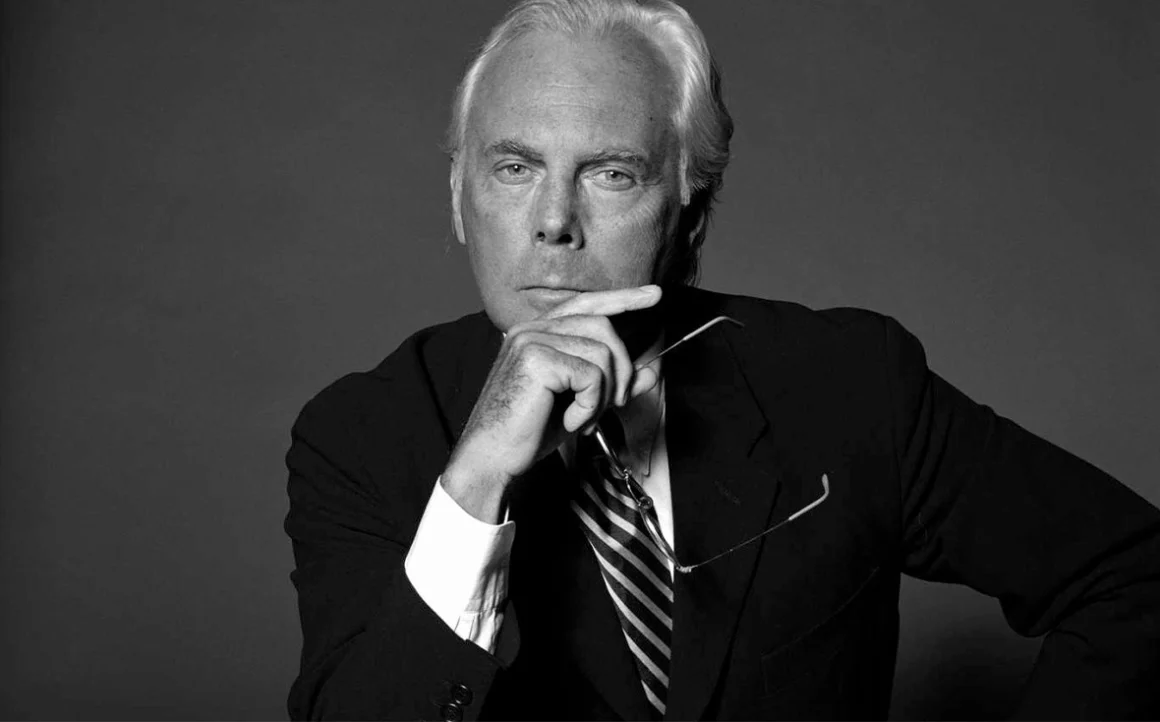
If you close your eyes and picture the word “elegance”, chances are a Giorgio Armani silhouette appears almost instinctively: a soft-shouldered jacket, a column of midnight satin, a palette of smoke, sand, and shadow. For nearly half a century, Armani dressed not only our bodies but our idea of sophistication itself. With his passing in 2025 at the age of 91, the fashion world didn’t just lose a designer – it lost the man who rewrote the language of modern tailoring and, quietly, changed how we all want to look.
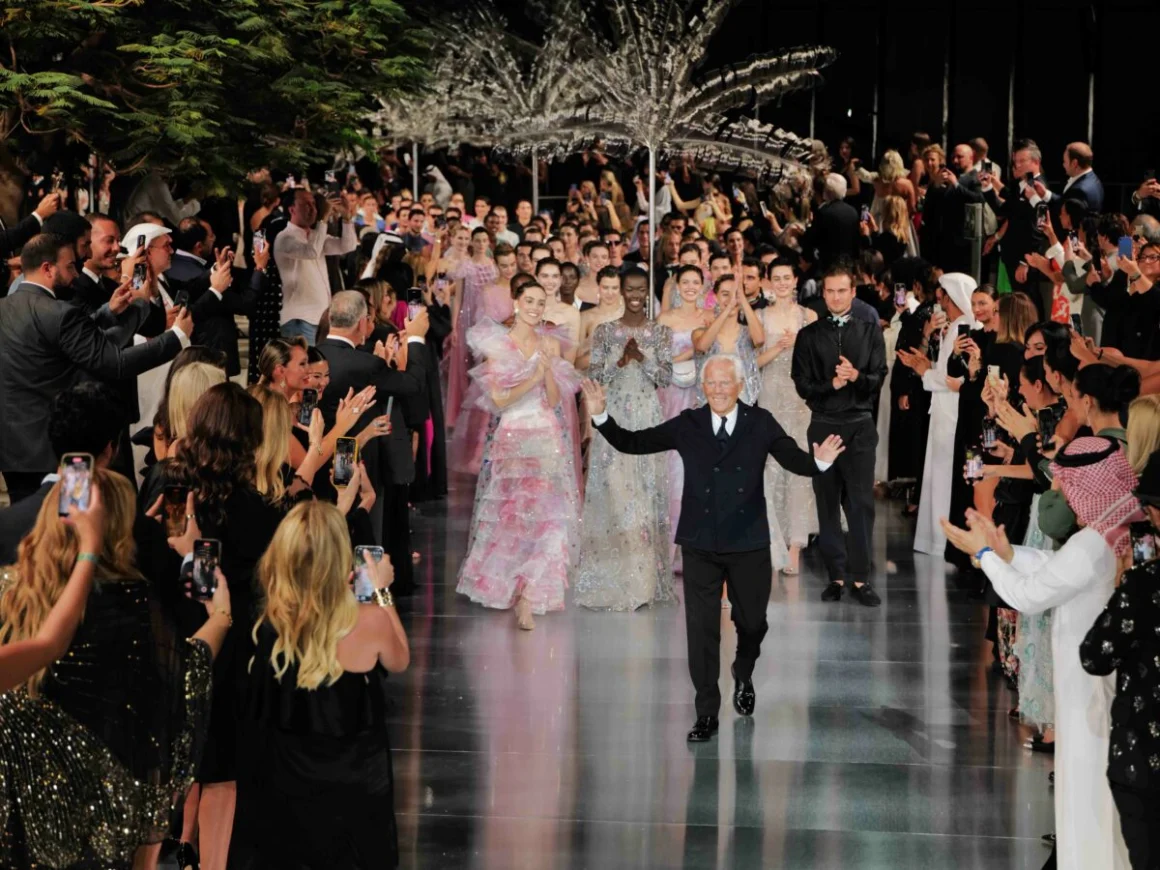
We’ve always felt that his clothes were less about trends and more about a mood: the confidence that comes when nothing is shouting, yet everything is impeccably right. This is our tribute to the man who built an empire on understatement – and whose legacy now stretches from the Oscars red carpet to the Olympic podium.
The man who softened the suit
Giorgio Armani’s journey is a very Italian story: discipline, beauty, and stubborn independence. Born in 1934 in Piacenza, he didn’t start out chasing fashion. After a brief stint in medical studies, he worked as a window dresser and salesman at Milan’s La Rinascente, absorbing how people actually live in clothes before he ever drew a sketch. Later, at Nino Cerruti, he learned the rigor of menswear tailoring – the grammar he would ultimately break.
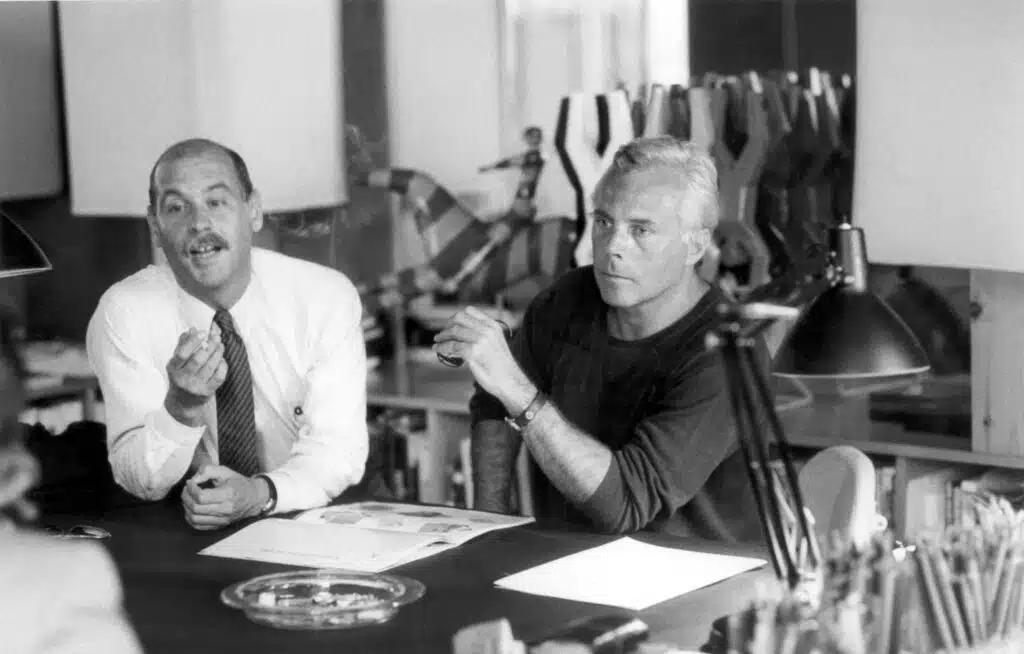
In 1975, encouraged by his partner Sergio Galeotti, Armani founded Giorgio Armani S.p.A. in Milan and presented his first men’s and women’s collections under his own name. What followed was quiet but seismic. He stripped the suit of its armour – removing heavy padding, relaxing the shoulder, lightening the canvas – and let it move with the body instead of constraining it. His colours were gentle: greige, dove grey, ink, sand. No screaming logos, no hysterical prints. Just line, fabric, and proportion.
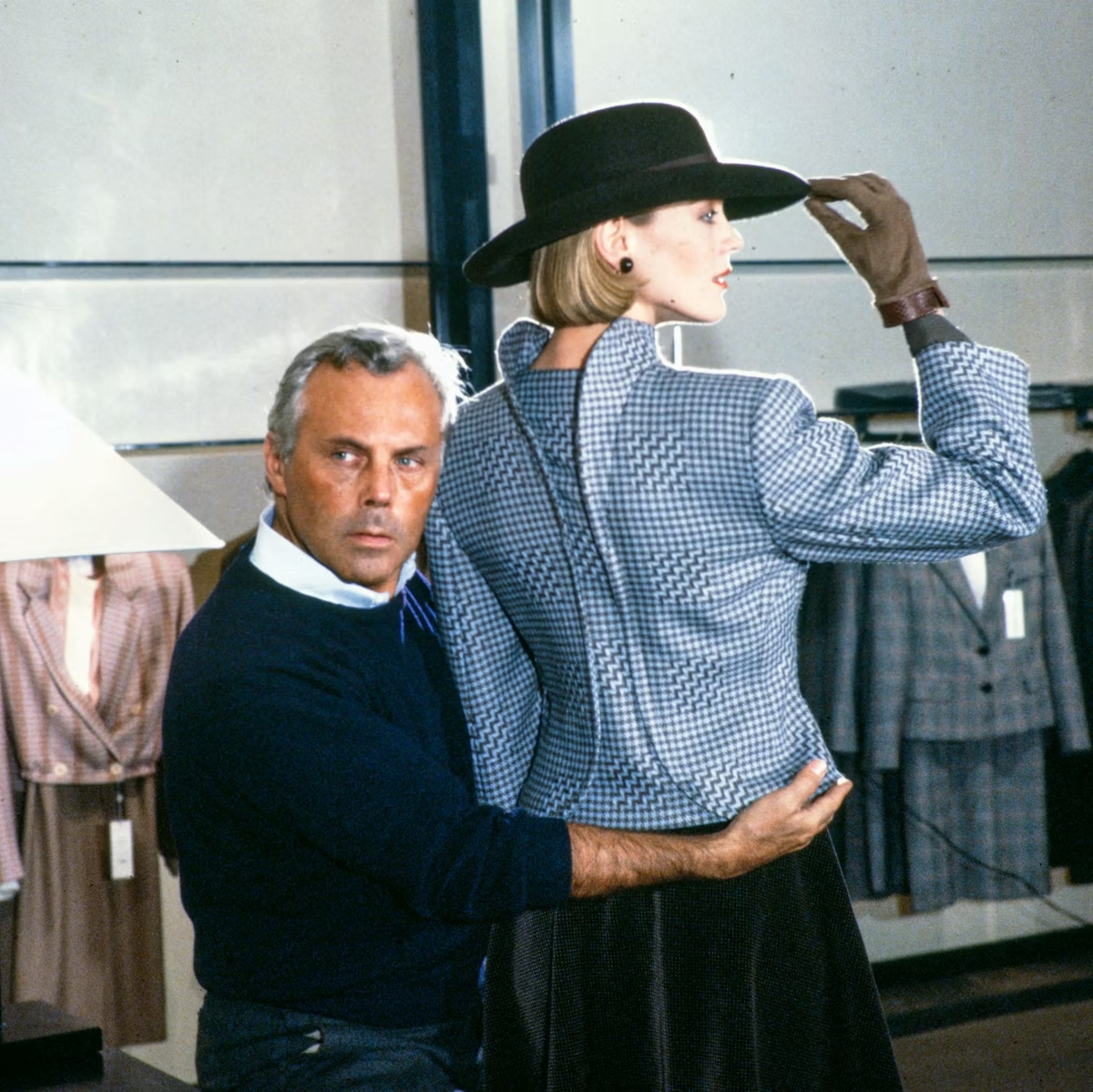
In an era of excess, this restraint felt almost radical. Those “soft power” suits became the uniform of a new kind of executive and actor: powerful, yes, but never try-hard. Today, as “quiet luxury” dominates moodboards and brands like The Row and Phoebe Philo’s work are praised for minimal, impeccably cut neutrals, even mainstream press openly trace that lineage back to Armani’s vocabulary of simplicity.
Hollywood discovers Armani
If Milan gave him discipline, Hollywood gave him myth. The real collision came in 1980, when Armani dressed Richard Gere in American Gigolo: a wardrobe of fluid suits and open-necked shirts that made tailoring look suddenly sensual, almost languid. That film didn’t just sell tickets; it sold a fantasy and a designer to the entire world.
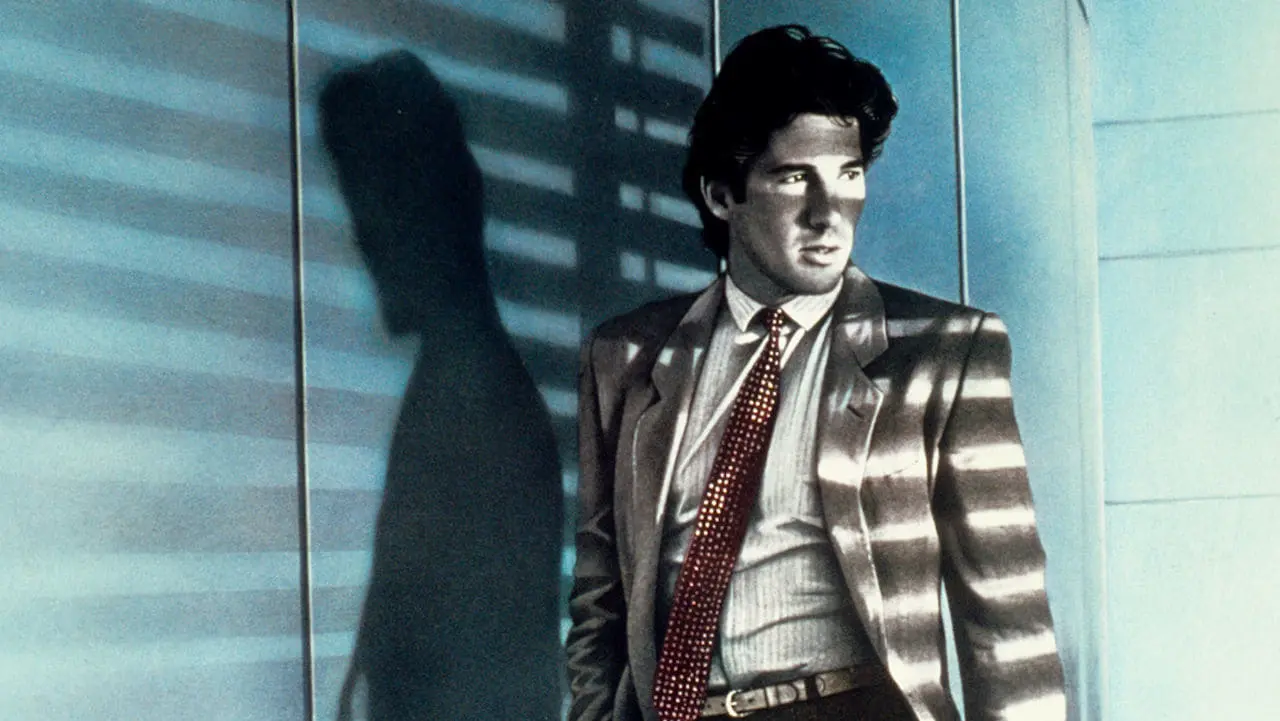
From there, Armani became the unofficial tailor of the power player. His suits appeared on Al Pacino and Robert De Niro, then on George Clooney and Brad Pitt in Ocean’s Thirteen, embodying a particular kind of masculine ease: unshowy, but impossible to forget.
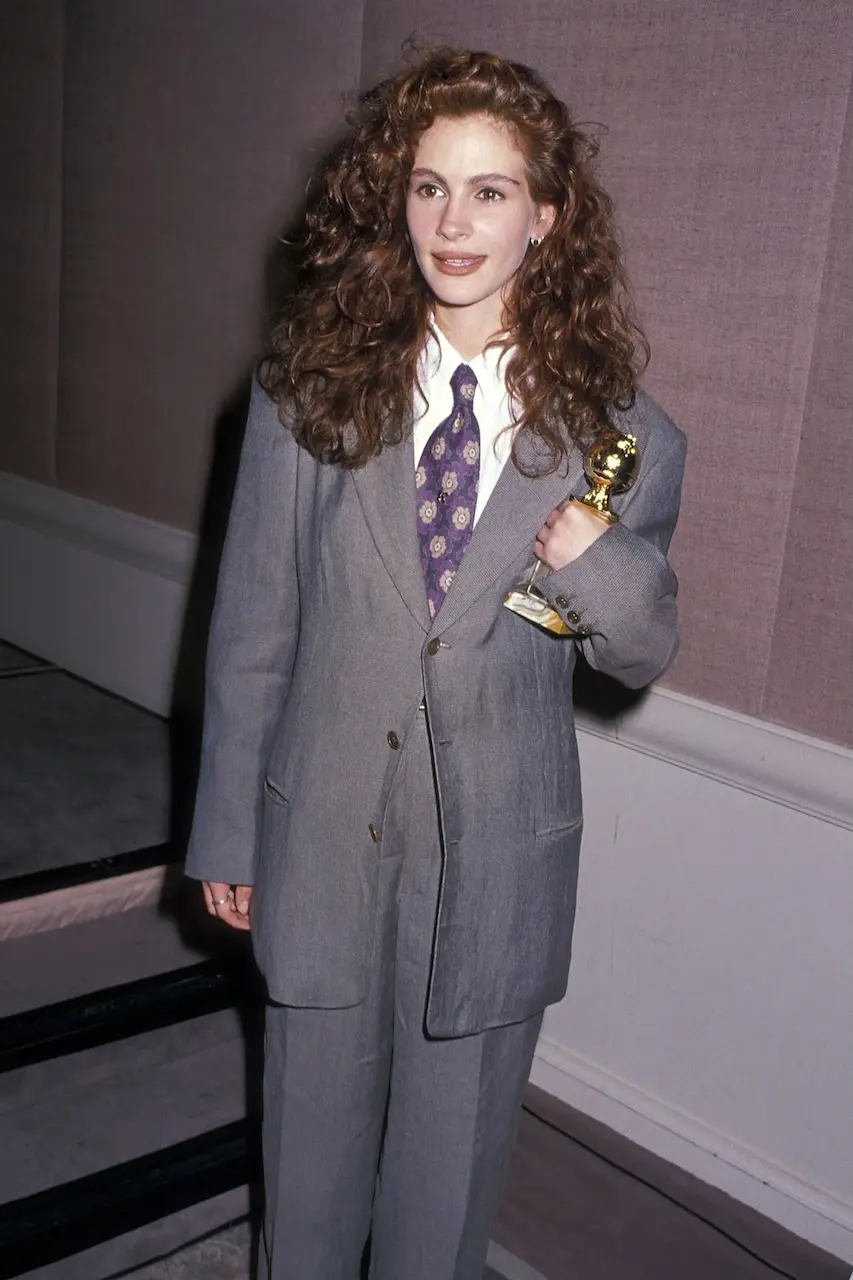
For women, he dismantled the rules of red-carpet dressing almost as radically. Diane Keaton was the first actor to wear Armani on the Academy Awards red carpet in 1978, in a double-breasted tailored look that quietly signaled a new era. By 1990, when Jodie Foster, Julia Roberts, Michelle Pfeiffer, Jessica Lange, and Jessica Tandy all walked into the Oscars in Armani, the press simply called it “The Armani Awards. ”
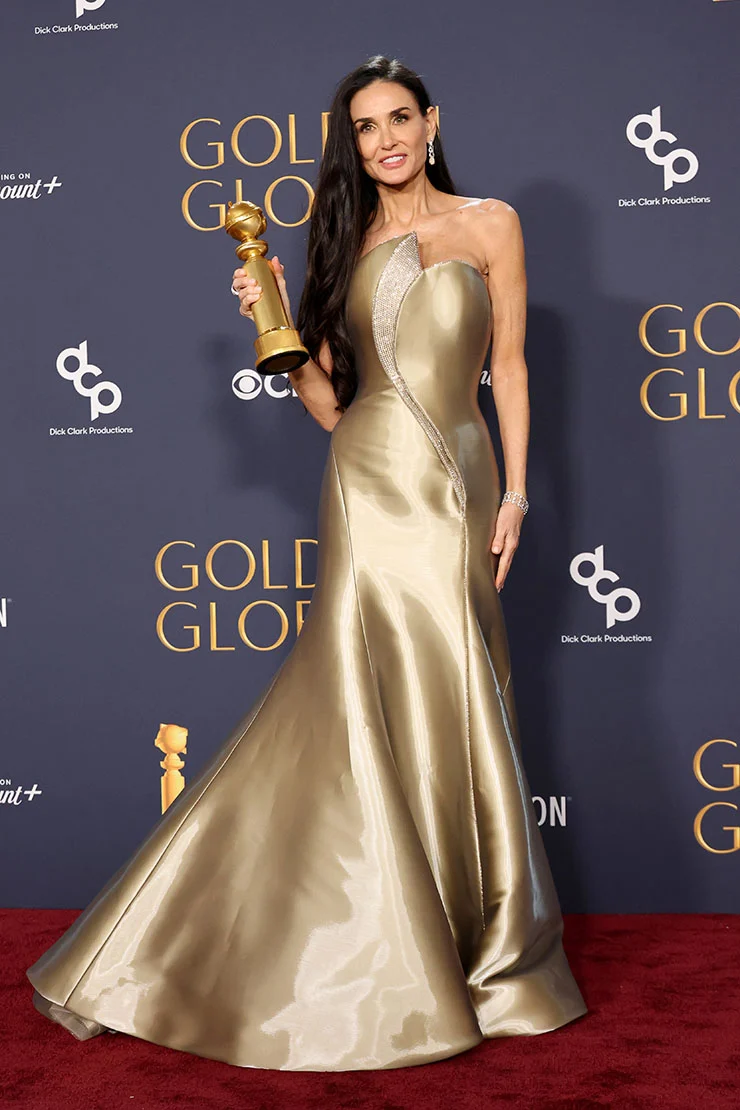
That night cemented what we now consider “red carpet” culture: actresses choosing a designer’s vision as a deliberate statement, not just borrowing something from the studio wardrobe. Since then, Armani has dressed everyone from Cate Blanchett in liquid crystal mesh at the Oscars to Demi Moore in a glittering Armani Privé gown at the 2025 ceremony, reinforcing his status as fashion’s quiet king of the red carpet.
A language of elegance
Armani’s power was not only in the clothes but in the philosophy behind them. “Elegance doesn’t mean being noticed, it means being remembered, ” he famously said – a line we at Chic Icon have quoted more than once when defending a perfectly cut navy blazer over yet another “It” dress.
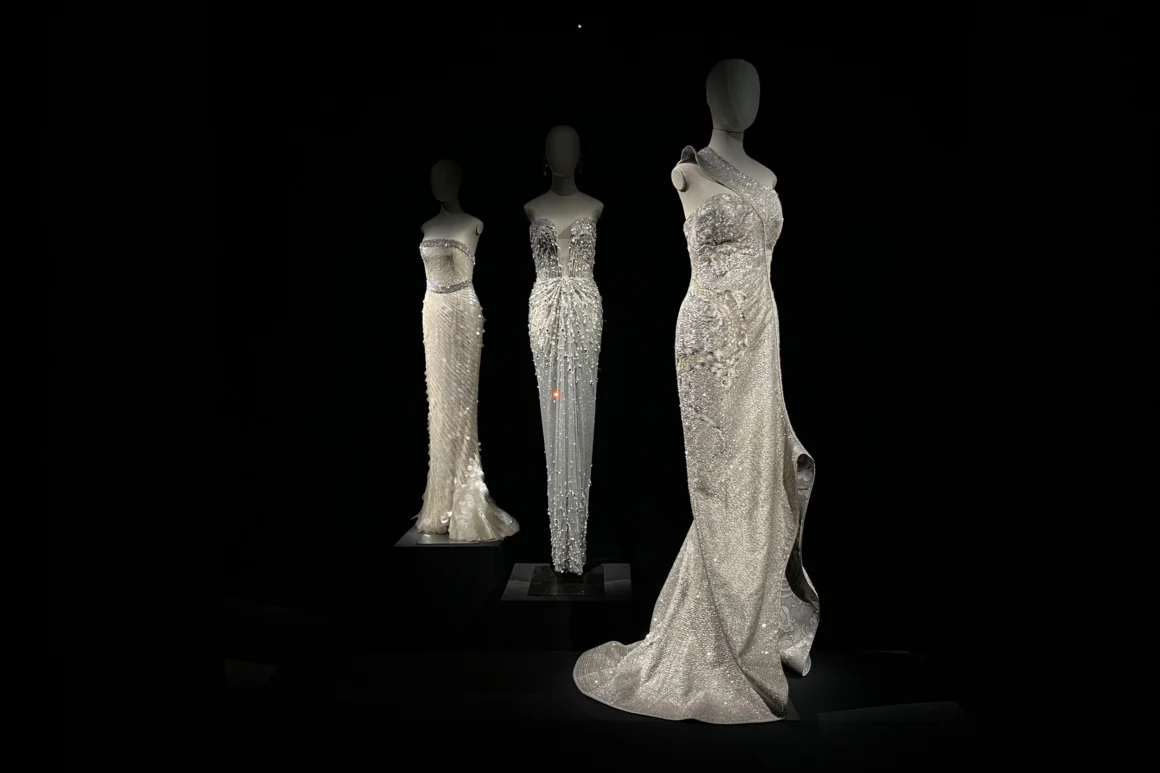
Again and again, his quotes return to the same themes: simplicity, authenticity, quality. He warned against chasing trends, insisting that style was about knowing yourself and having the courage to say no. “The law of luxury, ” he once said, “is not to add, but to take away” credo that anyone who has ever edited a suitcase before a trip understands deeply.
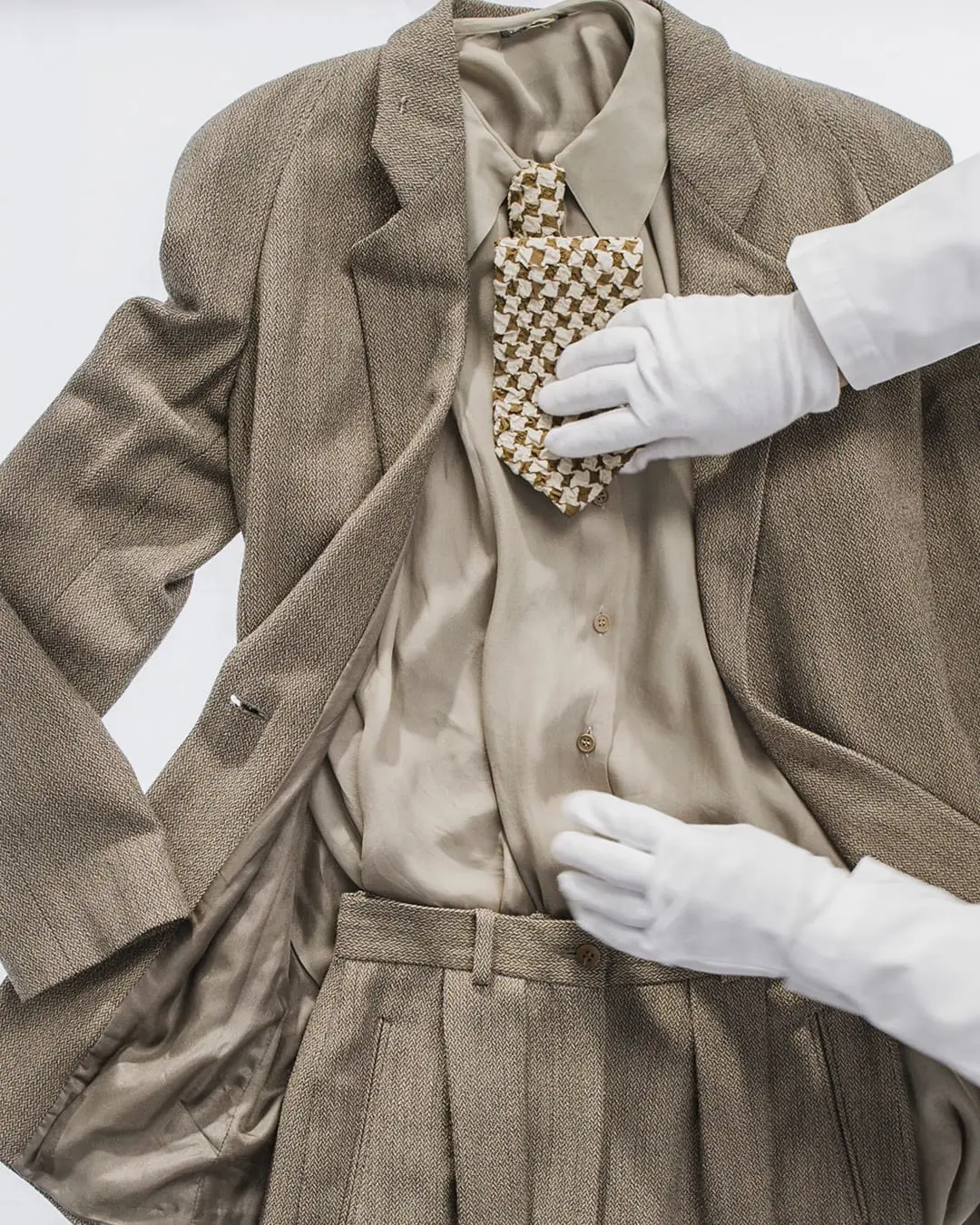
His empire grew beyond the runway to include Emporio Armani, Armani Privé, Armani Casa, and even hotels, yet he kept the company independent, resisting the siren song of luxury conglomerates. Even the blockbuster retrospective at New York’s Guggenheim Museum in 2000 felt like an extension of the same language: clothes displayed as architecture, movement, light.
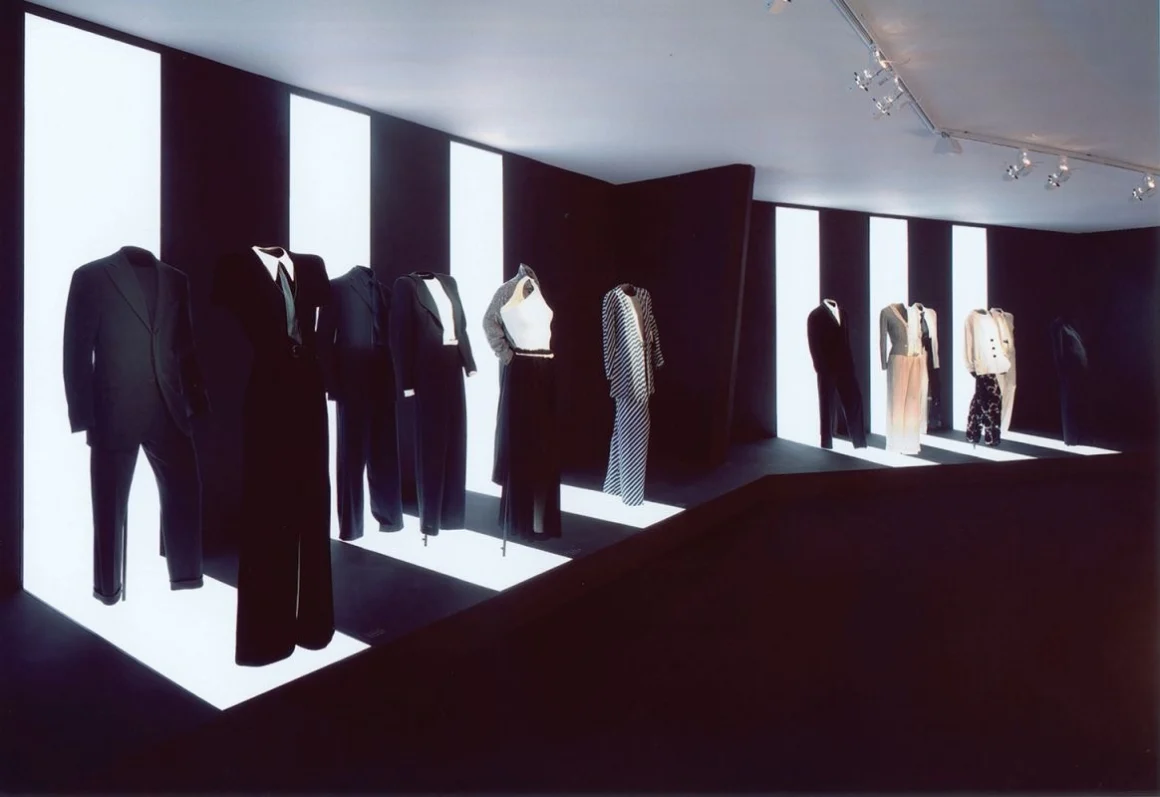
You can feel his influence in today’s “stealth wealth” moment, in the way we talk about investment pieces, in the quiet dominance of well-cut navy, stone, and charcoal in every serious wardrobe. Many designers have shouted over the decades; Armani is the one whose whisper still carries.
From runway to Olympic podium
It feels fitting that one of Giorgio Armani’s final great projects was intrinsically tied to national pride and physical grace. Through EA7 Emporio Armani, his performance line, Armani became the official outfitter of Team Italy for multiple Olympic Games, including the recently opened Milano–Cortina 2026 Winter Olympics and Paralympics.
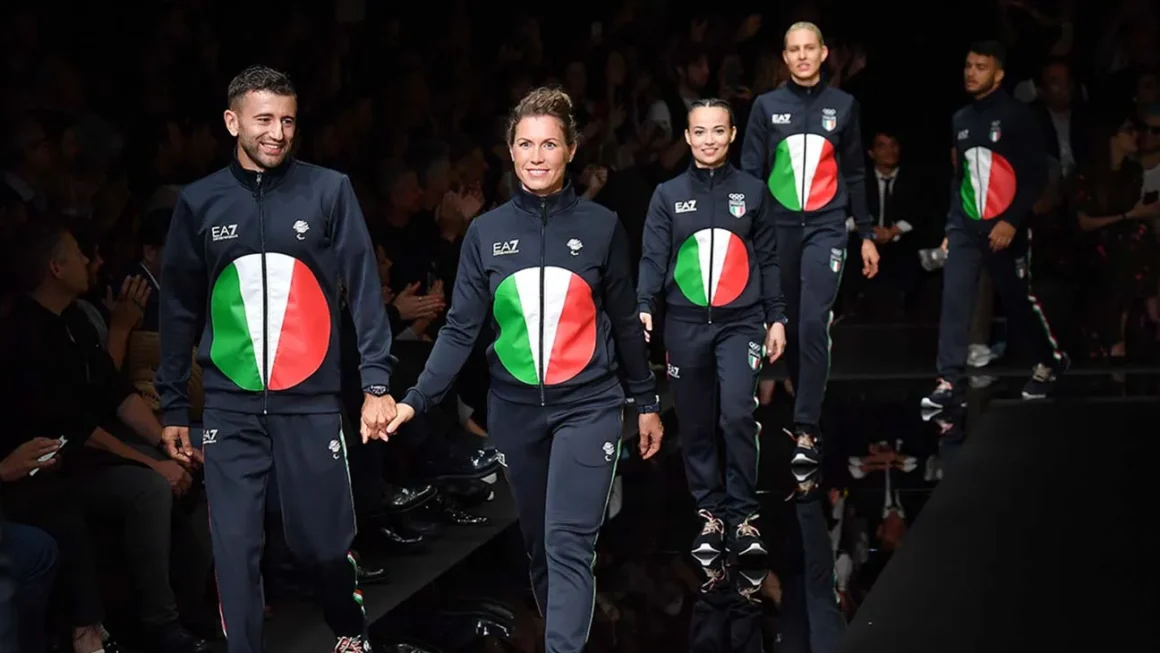
His designs for the athletes – snowy whites, clean lines, discreet tricolore details – translated his lifelong obsession with purity and function into technical sportswear. He spoke of wanting the uniforms to reflect simplicity and respect, with white echoing the winter landscape. It was Armani’s elegance, reimagined for the podium and the slopes.
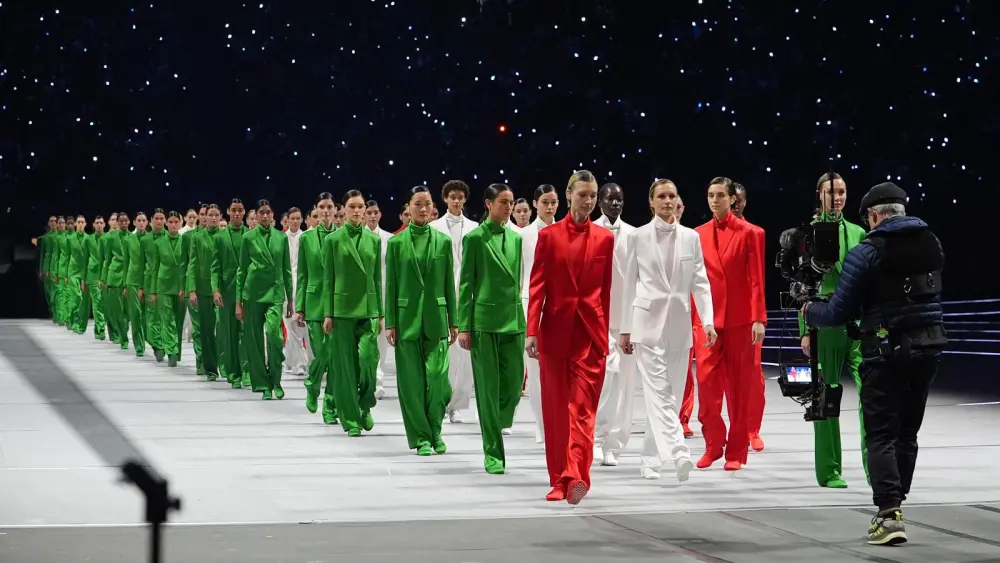
When the 2026 Winter Games opened in Milan, the ceremony included an emotional tribute to the late designer: three groups of models in green, white, and red Armani looks forming the Italian flag, while host nation athletes marched in EA7 ensembles that subtly honoured his legacy. It was a rare moment where sport, fashion, and national identity merged into one – a reminder that Armani was not just dressing individuals, but a collective idea of what Italian excellence looks like.
The legacy we live in
Who did Giorgio Armani influence? In truth, all of us. Designers like Phoebe Philo, labels such as The Row, and the broader movement toward “quiet luxury” owe a clear debt to his belief that dignity and comfort can be more seductive than spectacle. Hollywood stylists still reach for his tuxedos when they want their clients to look powerful but not overdressed; actresses still choose Armani Privé when they want gowns that shimmer without shouting.
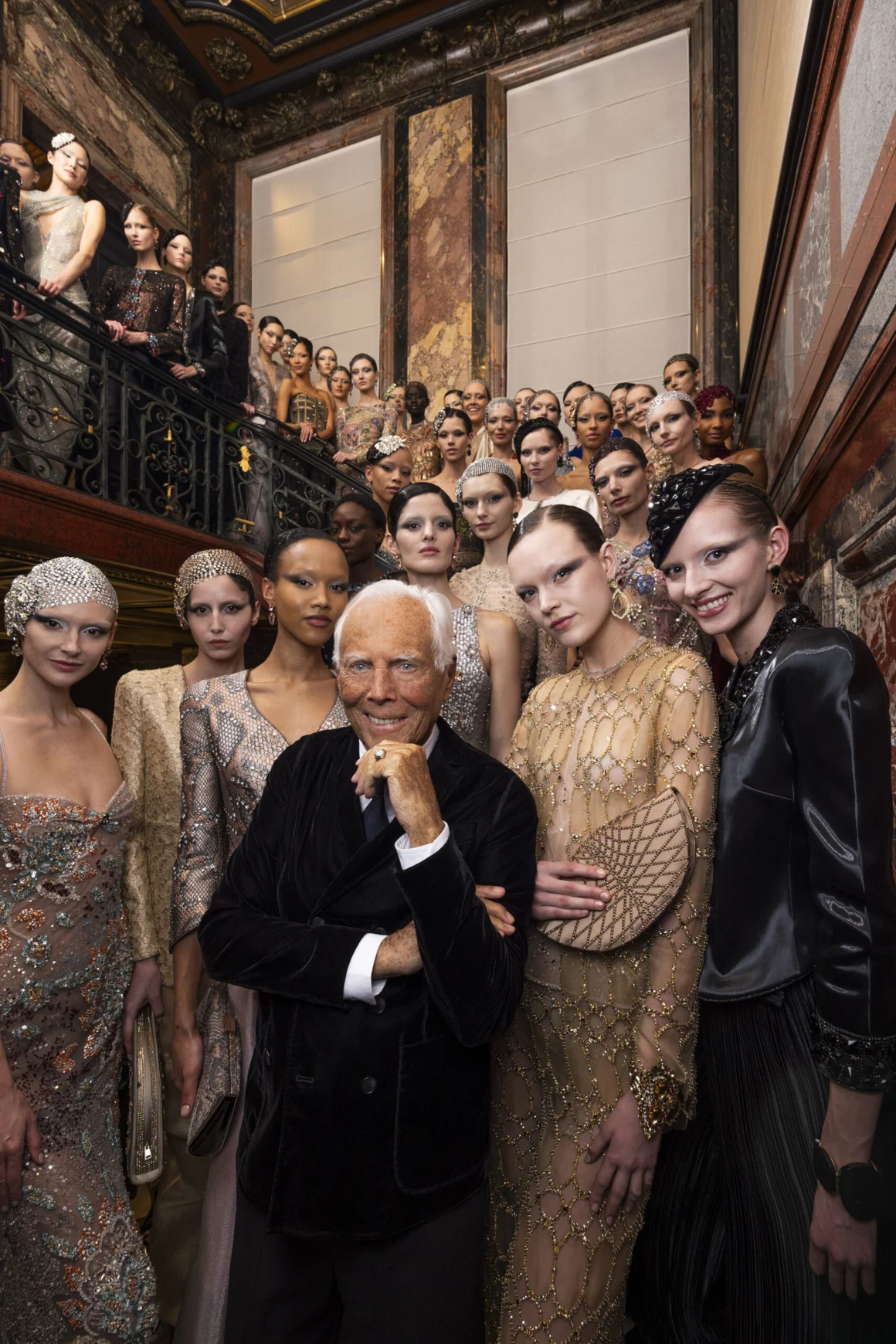
We often talk about “forever pieces”: the jacket you’ll wear for a decade, the dress that survives three fashion cycles without looking tired. Armani built an entire world on that notion. His work leaves us with a simple, demanding question every time we get dressed: are we trying to be noticed, or to be remembered?
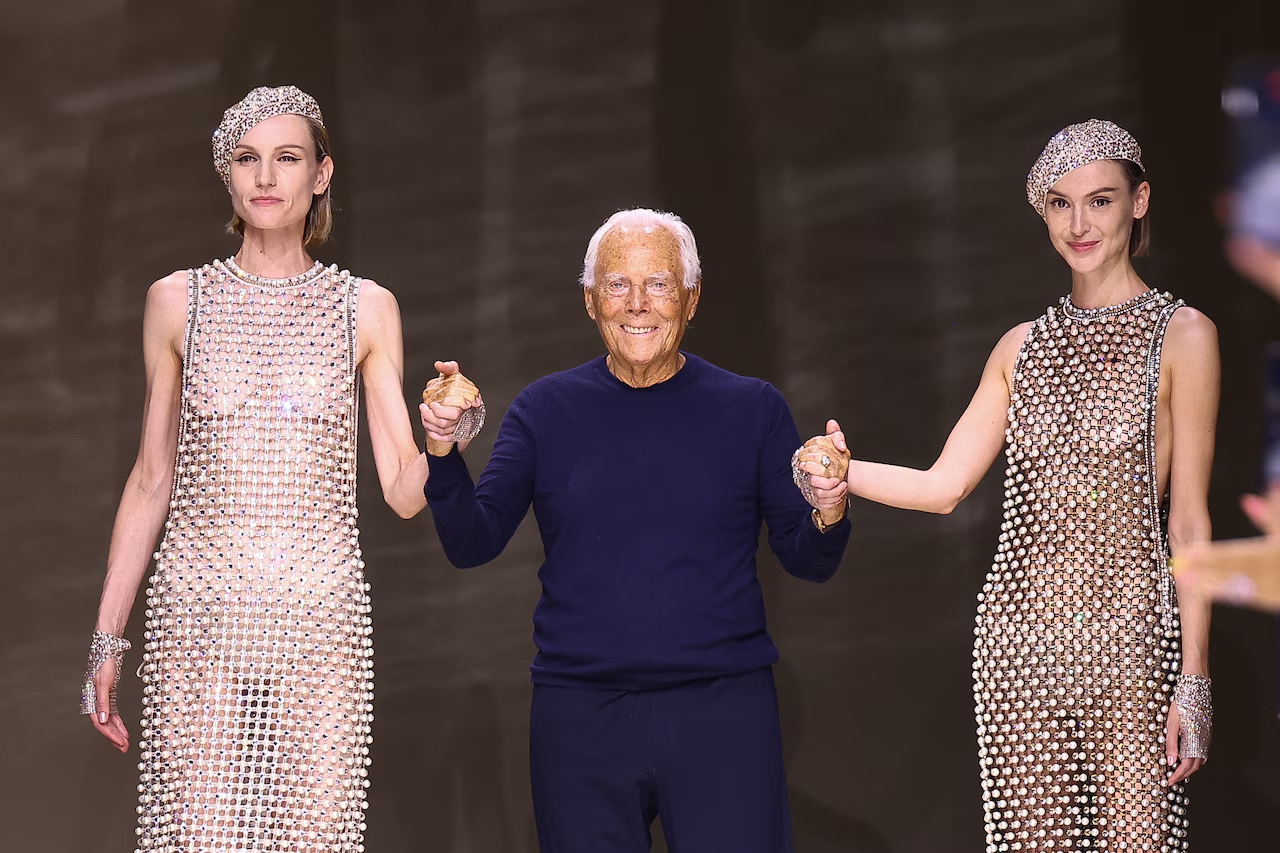
Some designers burn bright and fast; Armani was a long, steady flame. From Piacenza to the Palais des Festivals, from the Armani Theatre in Milan to the Olympic stadium in his home country, he stayed remarkably faithful to his own eye. In an industry obsessed with reinvention, that kind of consistency is its own quiet revolution.
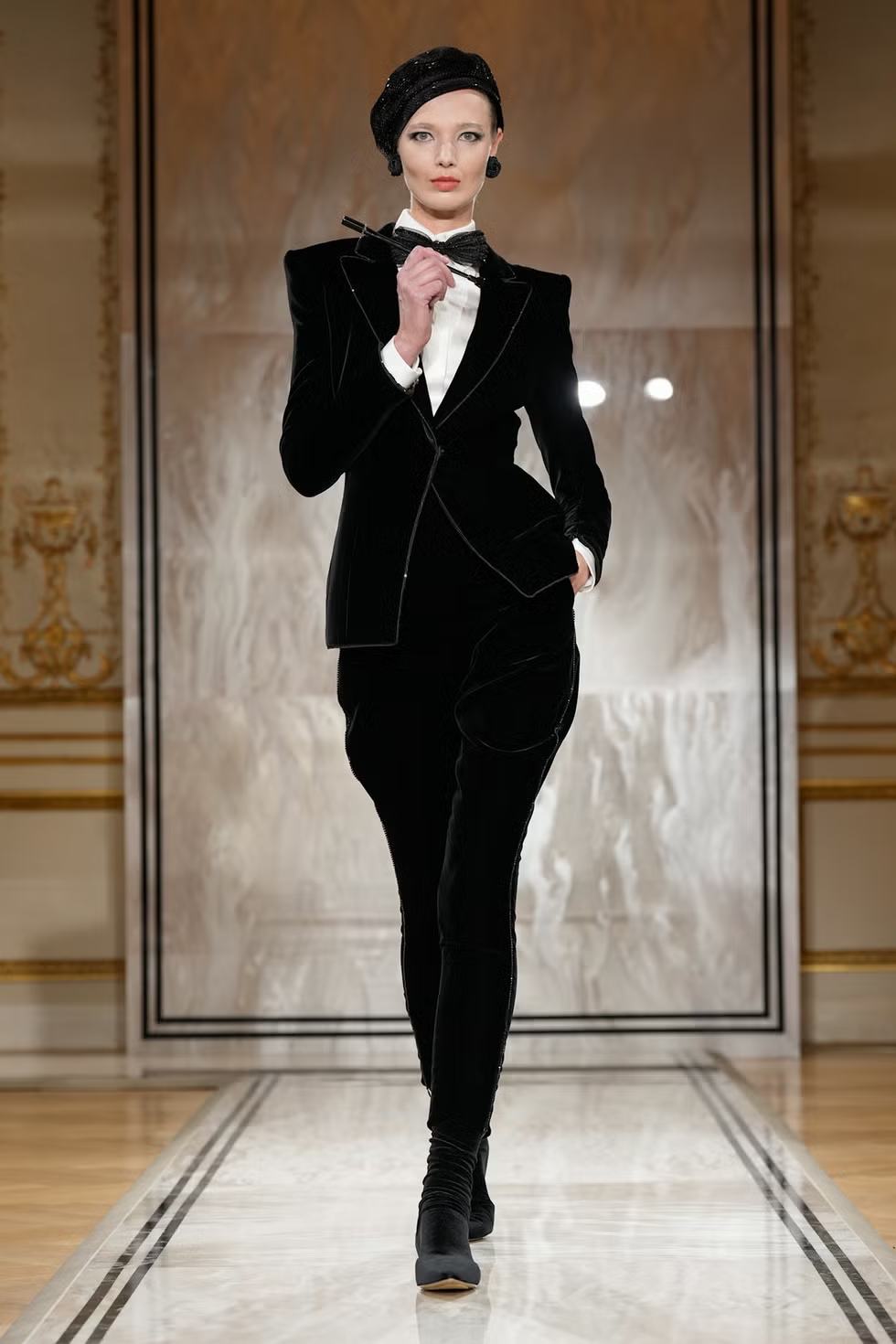
And perhaps that is the most beautiful tribute we can offer: to keep choosing clothes and lives that feel like his best suits. Precise, thoughtful, beautifully made. Not clamouring for attention, but impossible to forget.
Read more FASHION articles HERE