Concluding our trilogy on sacred aromas, we ascend to the pinnacle – to the Queen of all essential oils, to Rose. The rose oil aroma is the very vibration of Love, crystallized in the material world.
Ancient Origins: The Flower That Conquered Civilizations
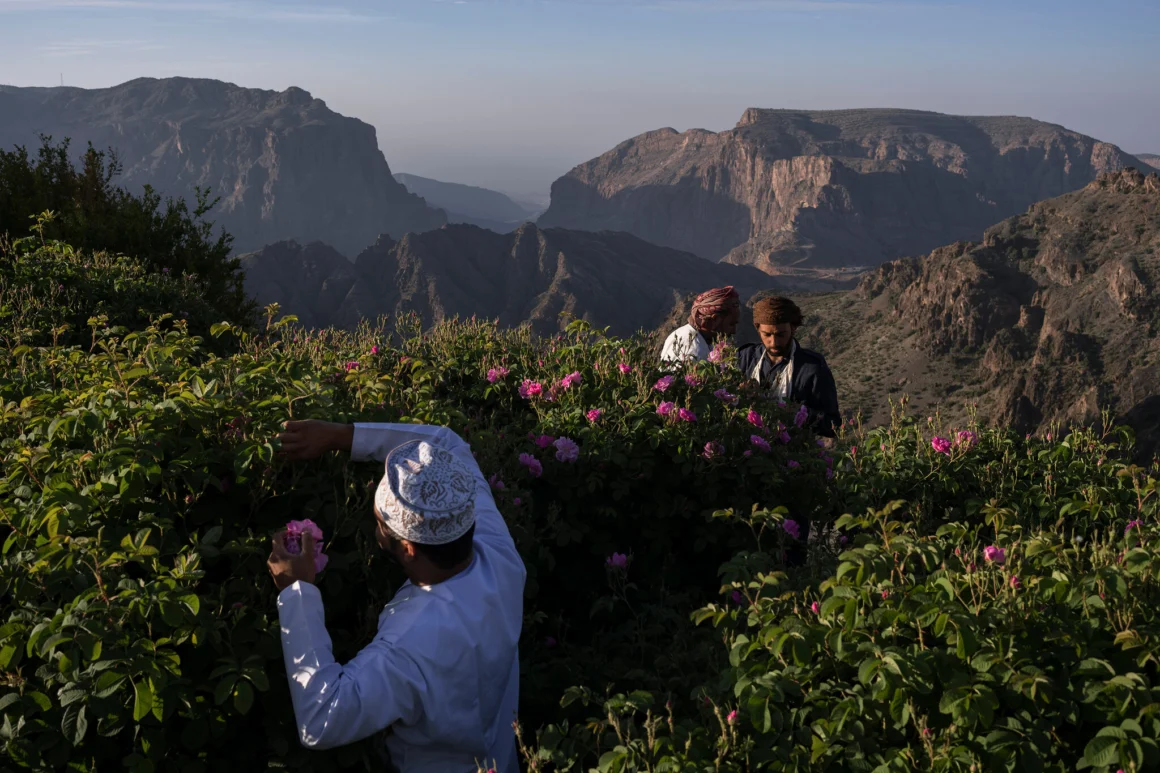
For centuries, the main center for the production of rose oil and rose water was the valley around the city of Kashan in Persia, and later, the region of Bulgaria (The Valley of Roses). Along the Great Silk Road, alongside silk and spices, they carried tiny, incredibly expensive vials of rose essence – the “liquid gold” of the East.
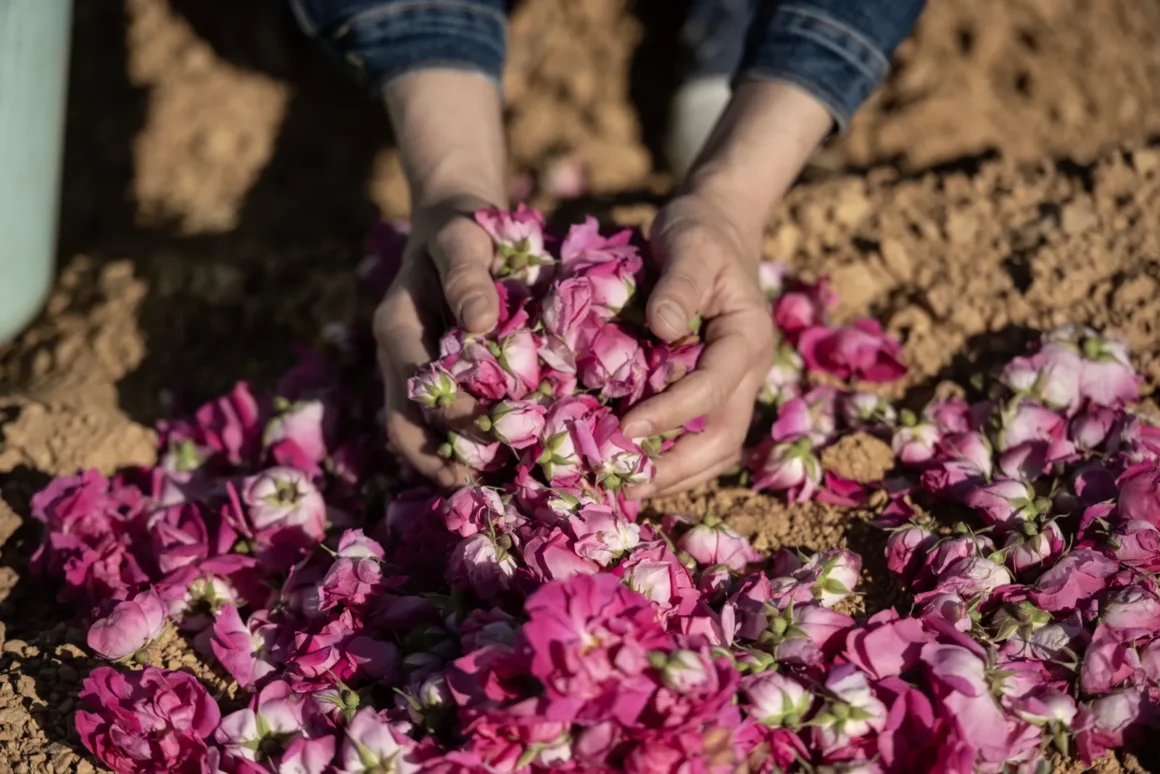
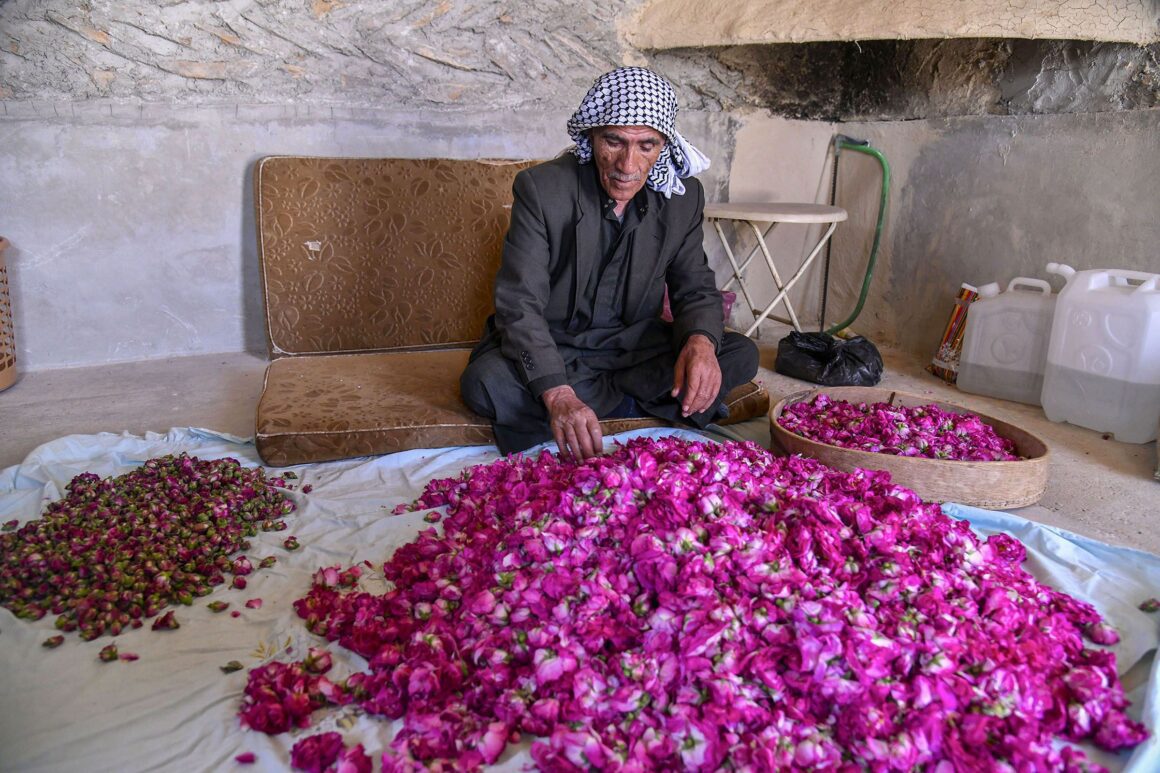
The process was and remains titanic. To obtain one kilogram of essential oil by steam distillation requires about 4 tons of petals, collected at dawn when the aromatic compound content is at its peak. Each drop of oil is the quintessence of labor, sun, and earth, which explains its regal price and status.
Since ancient times, the rose was not merely a flower but a sacred symbol around which cults, myths, and magical practices formed. Its fragrance was considered the breath of the gods, and its petals — the material embodiment of divine love and mystery.
Cultivation of roses first began in the Middle East about five thousand years ago. Historians and poets agree that the true homeland of the queen of flowers is Persia, which in antiquity bore the sublime name Gulistan — “the garden of roses” or “flower garden.” In Persian culture, the rose was revered not as a creation of human hands but as a direct and fragrant gift from the Creator.
This reverence for the rose became deeply rooted in Islamic tradition, where the flower gained sacred status. According to some accounts, the rose was created by Allah Himself. Other legends say it grew from drops of the Prophet Muhammad’s sweat that fell to the ground during his miraculous ascension to heaven (Al-Mi’raj). It is said that the Prophet greatly loved Persian roses and proclaimed, «Whoever wishes to smell my scent, let him smell the rose.» Thanks to this saying, the Damask rose came to be respectfully called the “Rose of Muhammad.”
In this sacred context, rose water and precious oil were used not merely as luxuries but as vital elements of ritual purification. It was believed that its aroma had the power to summon angels (peri) and ward off evil spirits (divs). Thus, the rose became a visible prototype of paradise on earth – a perfect symbol of divine beauty, simultaneously near, eternal, and unattainable in its absolute ideal.
In Ancient Egypt, the rose was associated with the goddess Isis – the great healer and protector. Egyptians believed the rose was born from drops of sweat from the goddess of love, Hathor, that fell to earth. Rose oil was an obligatory part of burial rites: bodies were anointed with it so that its fragrance would accompany the soul to the afterlife and please the gods. Pharaohs slept on pillows stuffed with rose petals, believed to grant prophetic dreams.
In Ancient Greece, the rose was created, according to myth, from the sea foam that accompanied the birth of Aphrodite. As the goddess of love stepped ashore, she dropped droplets of this foam, and from them grew the first white roses. Later, they turned red, stained with the blood of her beloved Adonis. The rose became an attribute not only of Aphrodite but also of the god of wine, Dionysus, as a symbol of passion, liberation, and simultaneously, the brevity of earthly pleasures. Greeks adorned temples, banquet halls, and the heads of eminent thinkers with roses, believing their aroma clarified the mind.
In Ancient Rome, the cult of the rose reached incredible opulence and mystical scope. The rose symbolized victory, divine favor, and mystery. At feasts, tons of petals rained from the ceilings, and whole garlands were thrown into pools of wine. But there was another, darker aspect: the rose was an emblem of silence – sub rosa (“under the rose”). An artificial rose hung above the table during secret negotiations obliged all present to keep the secret. This made the rose a symbol of mysteries, secret knowledge, and hidden truths, accessible only to the initiated.
In India, the rose was revered as the flower of the god Vishnu and the goddess Lakshmi, embodying the preservation of the universe and abundance. It was believed that the rose attracted the blessings of the gods to the home and warded off misfortune. Yogis used rose essence to open the Anahata (heart chakra) and for meditations on pure, unconditional love.
Thus, in the ancient world, the rose played the magical role of a bridge between worlds: it accompanied birth and death, was an attribute of divine love and an instrument of mystical silence, healed the body, and elevated the soul. Its aroma was considered a key capable of opening doors to both earthly pleasures and spiritual revelations. This universal cult made the rose an eternal, timeless symbol whose magical power over the human heart does not wane to this day.
General Symbolism: The Flower That Contains the Universe
The rose is the most multifaceted symbol in human culture. It simultaneously represents:
Absolute Love and Divine Beauty. In Christianity, it is a symbol of the Virgin Mary and the blood of Christ. In Sufism, it is an image of the face of Allah.
Mystery and Wisdom. A closed bud represents an unknown truth, while a bloomed flower symbolizes revelation.
Perfection and Harmony. Its form is the standard of the golden ratio.
Duality and Wholeness. Delicate petals and sharp thorns, passion and purity, life and death. The rose teaches us to accept opposites as parts of a single whole.
The Heart and Spiritual Transformation. In alchemy, the red rose symbolized the completion of the Great Work—the attainment of the philosopher’s stone and the immortality of the spirit.
Rose Aromapsychology: The Path of Royalty and Integrity
In the world of sacred aromas, Rose essential oil occupies the highest rank. It is often called the Queen of Essential Oils, and this title is more than just a metaphor. According to frequency research, such as that of Bruce Tainio, Damask Rose essential oil vibrates at 320 MHz – the highest of all known essential oils, a true resonant crystal of cosmic love.
Rose is a portal, an entrance to the realm where the soul finds its true home.
Damask Rose is pure cosmic love, a pink crystal of silence, tranquility, and total Trust. In aromapsychology, it acts as the Queen of Duality, helping the individual integrate all inner opposites.
Rose essential oil helps:
Know your Value. As the Queen, the Rose teaches unconditional self-respect and a rejection of toxic relationships (its thorns represent healthy boundaries).
Open the Heart without Fear. It removes the armor from the heart chakra, allowing one to experience and give Unconditional Love, process losses, and release resentments.
Find Inner Peace. It leads to peace, knowledge of one’s path, and gives the strength to follow it.
Transcend the Ego. Its vibration invites one to a state of detached contemplation and total acceptance, where the petty self dissolves.
Become Whole. The Rose helps connect the mind, heart, and body, activating the inner Merkabah – the crystalline body of Light. It is a rocket for spiritual ascension.
Rose. The variety matters.
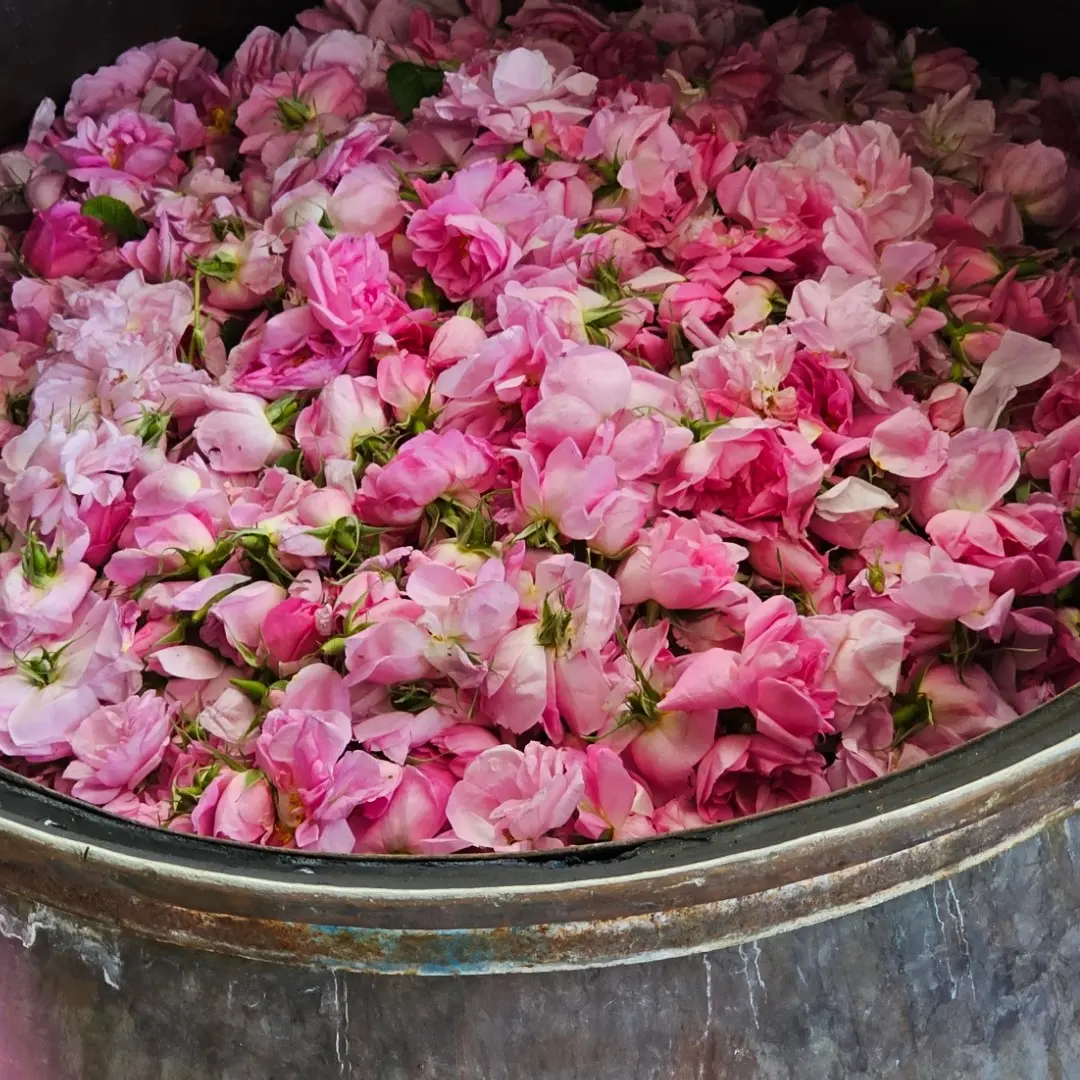
Rosa × damascena (Damascus rose)
Region: Historically – Persia, Syria. Today – mainly Bulgaria (Rose Valley), Turkey, Iran.
Status: Gold Standard and Queen. The most valuable and revered variety for producing essential oil and rose water. Possesses the highest spiritual vibration (approximately 320 MHz).
Aroma: Uniquely deep, rich, honey-floral, with spicy and slightly tobacco notes. This is a classic, complex “oriental” rose scent.
Use: For higher spiritual practices, meditation, opening the heart, in luxury perfumery, and for creating a space of unconditional love.
Rosa centifolia (May Rose, Hundred-petaled)
Region: France (Grasse), Morocco.
Status: Aristocrat of Grasse. Widely used in haute perfumery. Slightly more accessible than Damask rose.
Aroma: Greener, fresher, and lighter than Damask rose. Reminiscent of dew on a newly blossomed bud.
Uses: In sophisticated perfume compositions, for emotional exploration, and for sensitive skin care.
Rosa alba (White Rose)
Region: Bulgaria, Turkey.
Status: Rare. Symbolically associated with purity, innocence, and spirituality.
Aroma: More delicate, subtle, and less sweet, with light fruity undertones.
Uses: For meditations for purification, spiritual enlightenment, and for working with the higher chakras.
Aromatherapy: Healing with the Vibration of Love
For the heart and emotions: A powerful cardiotonic. Relieves nervous tension, panic attacks, helps heal emotional trauma, grief, and deep loneliness. Creates a feeling of security and acceptance.
For the hormonal system: Balances the female endocrine system, alleviates symptoms of PMS and menopause.
For the skin: Royal regenerator. Rejuvenates, improves elasticity, heals capillaries, and is effective for rosacea and inflammation.
How to use:
For the soul: 1 drop in an aroma pendant, 2-3 drops in a diffuser for meditation, inhale directly from the bottle during pain.
For the body: Massage the heart area (1 drop per 10 ml of base oil).
For the skin: 1 drop per 10 ml of carrier oil (jojoba) for nighttime care.
The rose is an invitation and an initiation. It calls only those who are ready to hear the call of their Soul. It is strict: it rewards according to merit, demanding purity of intention. But for a sincere heart, it becomes a portal—an exit from the realm of duality into the space of wholeness, where you are the very Love you’ve been seeking.
To taste a rose is to respond to the highest call of your own Soul. This is what I wish for you in the new year 2026!
Text by Elena Mechta: Certified Aromapsychologist & Leading Essential Oils Guide.
Read more articles on SELF-AWARNESS topics HERE