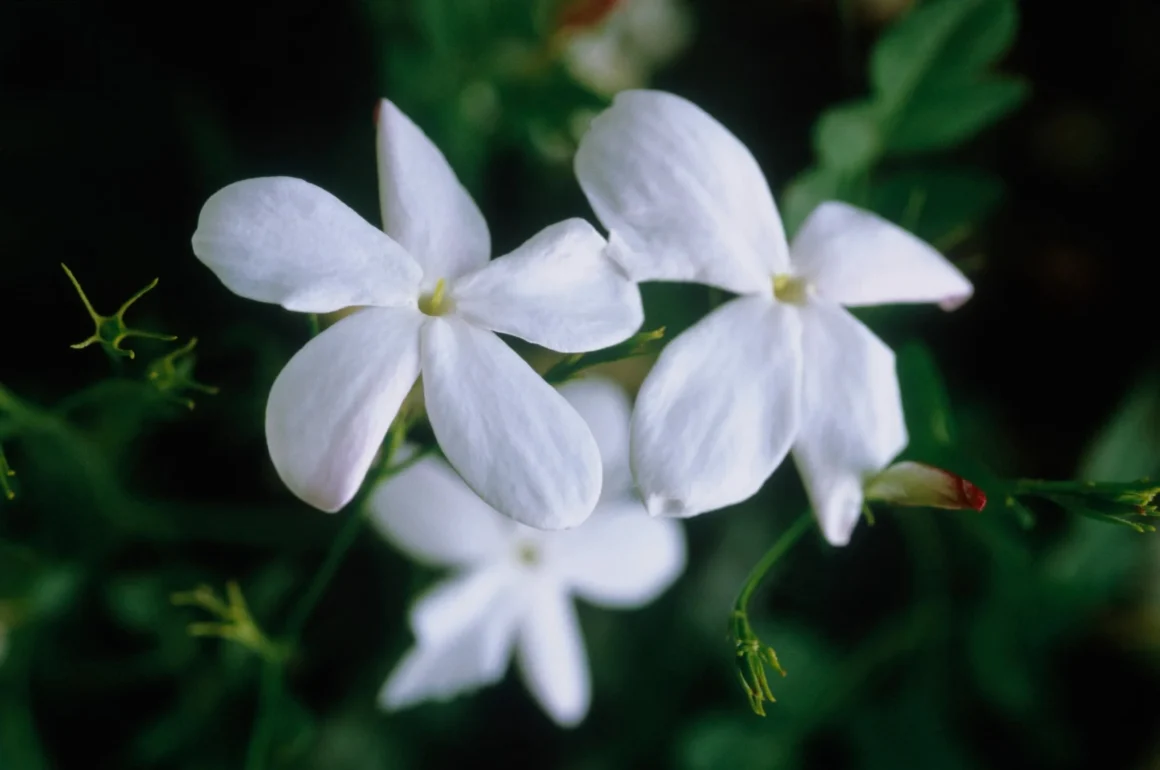
True treasures reveal themselves only when their time has come. Nature cannot be asked to create them faster. Their arrival cannot be rescheduled for a more convenient hour. And no more can be obtained than nature itself is willing to give.
One such treasure is born in Egypt, in the final hours before sunrise. The Moon Flower. It is the name that seems to come to mind even before its true name is spoken. Jasminum grandiflorum, Royal Jasmine.
While most of the world is still asleep, work has already begun in the jasmine fields. The small white blossoms are picked by hand, one by one. There is only a brief window before dawn, approximately between three and six in the morning, when the flowers are at their most precious for the production of aromatic material. Here, it is the human being who adapts to the rhythm of the plant, not the other way around.
A white flower in the darkness. Delicate, yet possessing an extraordinary presence. Most of the harvesters are women. There is something almost symbolic about this detail: one of the world’s most sensual flowers passes through women’s hands before the first rays of sunlight touch the earth.
Perhaps nature itself explains why the scent of jasmine feels so inseparable from the night. When sight is no longer the primary guide, the flower speaks another language. Volatile aromatic molecules create an invisible trail, helping pollinators locate the plant. What humans would come to describe thousands of years later as sensual, alluring, almost hypnotic has a far more ancient meaning for the flower itself.
It is a way of being found. In the darkness, jasmine does not need to be seen. It is enough to be felt. And perhaps this is precisely where jasmine becomes, to me, an especially feminine flower. Not because its fragrance is traditionally described as sensual. Nor because for centuries it has been associated with beauty, love and seduction. But because its very nature evokes something far subtler: femininity itself.
Perhaps this is one of the most subtle expressions of feminine power: not to fill a space, but to transform it simply by being present. Jasmine proves nothing. It simply unfolds. And that is enough for it to be sought in the darkness.
A Fragrance That Has Travelled Through Civilisations
Jasmine has an extraordinary biography. Its history in Egypt reaches deep into antiquity. Later, jasmine returned to the region with Arab culture, and in the twentieth century, the Egyptian fields attracted the attention of fragrance houses from Grasse, France.
A journey emerged that seems worthy of jasmine itself: from the ancient banks of the Nile, through the Arab East, to French Grasse and the world of haute perfumery.
Each era seems to have tried to preserve what nature made almost impossible to capture: the scent of a living flower. Perhaps this is why fragrance has occupied a space between the tangible and the invisible for thousands of years.
A flower can be seen. It can be touched. A fragrance cannot be held in your hands. Yet it can take us travelling through memory. Back to a place we visited years ago. A summer. A first encounter. One particular evening.
It can also anchor the atmosphere of a particular moment in our memory, so that when we encounter the scent again, what returns may be far greater than the fragrance itself. Sometimes, a single breath is enough.
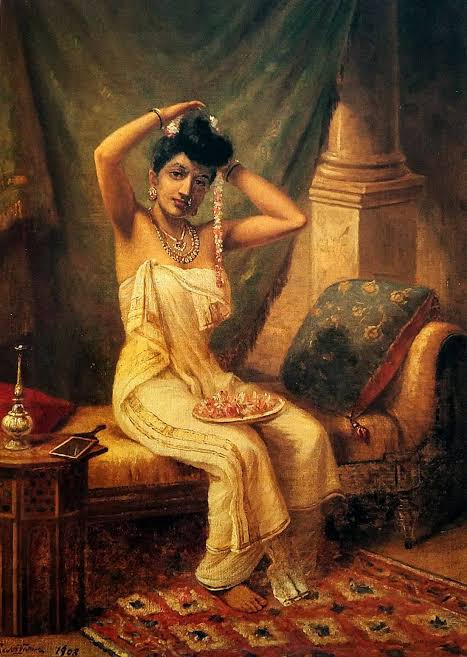
The Secret of Jasmine
There is one detail that even many perfume connoisseurs may not know. Natural jasmine has long held a special place among the most precious materials in the art of fine perfumery. Traditionally, however, its aromatic essence has been obtained primarily in the form of jasmine absolute.
Rich. Languid. Deep. Almost intoxicating. The absolute is magnificent. But an absolute and an essential oil are not the same thing. The reason lies within the flower itself.
Jasmine blossoms are so delicate that their volatile aromatic compounds have historically been obtained through extraction, first producing a concrete, an intermediate aromatic material, and then jasmine absolute.
For a long time, steam distillation was considered virtually impossible for flowers this fragile. And this is where the story of jasmine becomes particularly intriguing: a plant that had captivated humans with its fragrance for centuries proved remarkably resistant to our technology.
The tiny white flower simply would not surrender its scent in the conventional way. It took decades of research, experimentation, trial and error before jasmine could finally be steam-distilled successfully.
And suddenly, a familiar flower spoke in a different voice. Not better. Different.
Two Faces of the Same Flower
It would be unfair to judge jasmine absolute and steam-distilled jasmine essential oil against one another. Think of them instead as two portraits of the same plant. In the absolute, jasmine reveals itself as rich, intense and almost languid.
The steam-distilled essential oil creates a different impression: fresher, brighter, juicier and more delicate. Somehow, it seems to bring us closer to the sensation of the living flower itself.
Whenever I share this jasmine with people who are already familiar with beautiful fragrances, including jasmine itself, their reaction never ceases to fascinate me.
They open the bottle. They inhale. And then comes the sentence: “I have never experienced jasmine like this before.”
It was through these personal encounters that I felt compelled to tell its story. Because today, true rarity is no longer defined by price alone. It is defined by its ability to still surprise us.
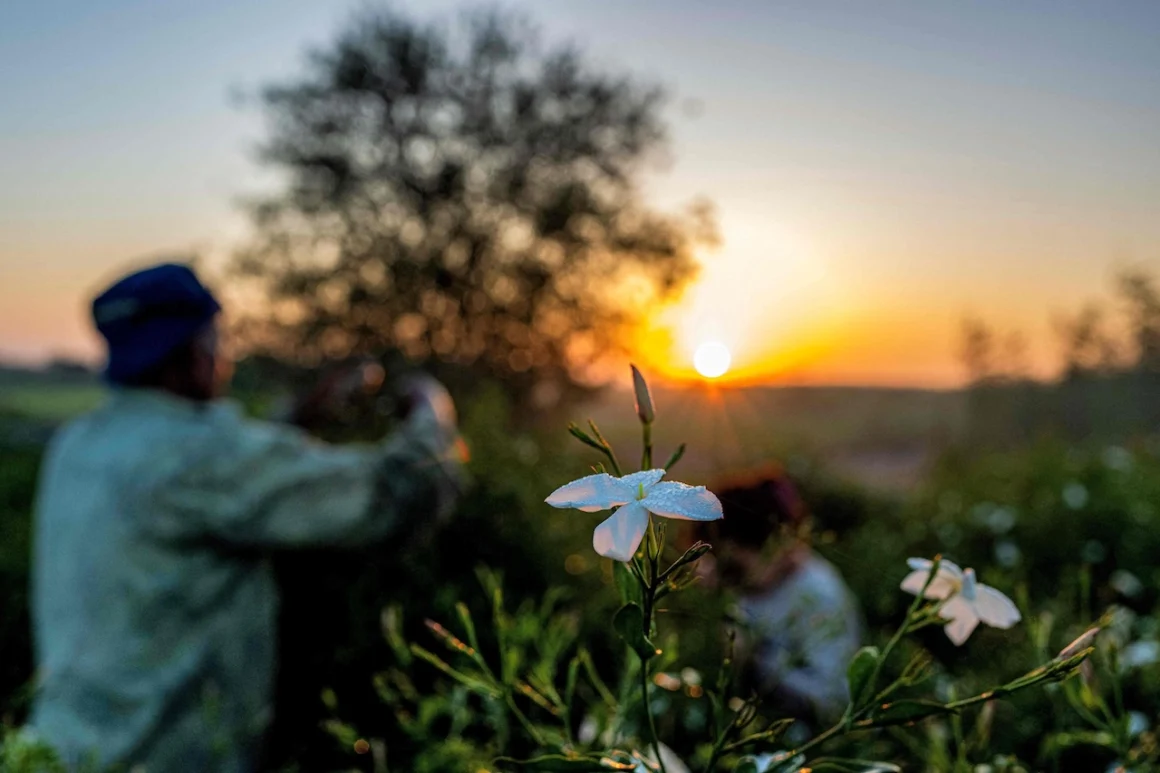
True rarity is no longer defined by price alone, but by its ability to still surprise us.
The Molecules of Sensuality
Behind jasmine’s centuries-old reputation as one of the world’s most sensual scents lies more than culture and symbolism.
There is biochemistry. An essential oil is a complex composition of volatile compounds. Yet we do not experience a fragrance as a list of chemical formulas.
Aromatic molecules interact with our olfactory receptors, and from there a far more intricate story begins. The olfactory system is closely connected with brain networks involved in emotion, memory, motivation and the regulation of our internal state.
This is why the body can sometimes respond to a scent before the conscious mind has found the words to describe it.
Studies of jasmine-derived aromatic materials have produced intriguing, though not always identical, results. Under some conditions, researchers have observed signs associated with greater alertness and activation. In others, lower-intensity jasmine aromas have been associated with calmer states and changes in autonomic nervous system activity.
Our response can depend on the intensity of the scent, the duration of exposure and even how pleasant we personally find the fragrance.
To me, this is one of the most beautiful ideas in modern aromatherapy. An essential oil does not contain a button labelled with the emotion we wish to feel. We encounter fragrance together with our nervous system, our memories, our associations and everything we have lived through.
One person finds tenderness in jasmine. Another, sensuality. A third, energy. And for someone else, a single breath may unexpectedly open the door to a place they have not visited in years.
The Luxury That Cannot Be Rushed
We live in an age of almost instant gratification. Food arrives within minutes. Continents can be crossed in a matter of hours. A single touch of a screen is enough to order almost anything. Jasmine remains indifferent to all of it.
It continues to live according to its own rhythm. It cannot be forced to open earlier. Its harvest cannot simply be moved to a more convenient hour. The flower must appear, unfold and find its way into human hands when it is ready, not when we are.
In a world of abundance, the ability to recognise what is truly rare acquires a value of its own. To know its origin. To recognise the quality of the material. To understand how much time and human work can exist behind just a few millilitres. And not to rush past our own response to it.
How to Listen to Jasmine
I like to encounter rare fragrances in much the same way I encounter art. Without rushing. And without feeling the need to decide immediately whether I like them. Open the jasmine. Take your first breath from a slight distance. Close the bottle. Return to it a few minutes later. The first impression is almost always the loudest. The second allows us to hear the details.
Ask yourself: What am I actually feeling? Freshness or warmth? Green notes or floral sweetness? Tenderness or sensuality? Do you want to move closer, or step away? Has a memory appeared? Has something shifted in your inner state? Do not rush. And do not begin by asking: “What is this oil for?”
Try another question: “What happens within me when I am in the presence of this scent?” This is where a true encounter with essential oils begins. Not with a table of properties, but with our own perception. Sometimes a fragrance changes nothing. It simply makes visible what was already happening within us.
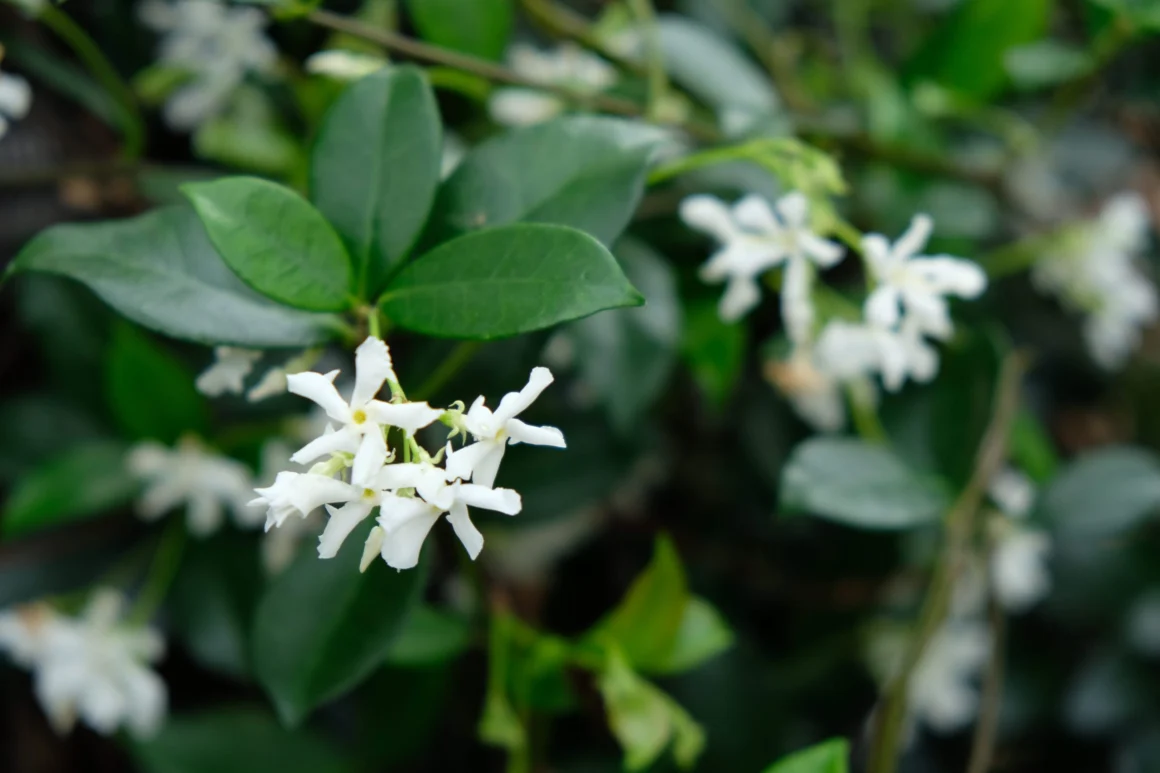
The Realm of Jasmine
Jasmine is particularly beautiful as a personal scent. Just a trace on the skin. The wrists. The neck. The décolletage. This is not a fragrance that enters the room before you do. It is the kind of fragrance discovered by someone who has come close enough. There is an almost forgotten form of sensuality in that. Not to display. To feel.
Jasmine can be worn alone. Paired with sandalwood, it acquires depth and velvety warmth. With rose, its floral opulence becomes even more pronounced. With bergamot, air and light enter the composition. But sometimes a precious stone needs no setting at all. One of my favourite practices with essential oils is to choose a particular scent for a moment I want to remember. A beautiful journey. An important evening. An encounter. The beginning of a new chapter. And then, months later, I open it again. Perhaps memory will return not simply the event, but its atmosphere. Because some memories are kept in photographs. Others remain with us in scent.
The Secret of the Moon Flower
We can study jasmine’s chemical composition, its origins, the history of perfumery, extraction methods and the neurophysiology of smell. But fragrance can never be fully understood through intellect alone. At some point, words come to an end. All that remains is to inhale. And allow ourselves a few seconds without analysing anything at all. Somewhere in Egypt, three o’clock in the morning will come again. The harvest will begin in the jasmine fields. One by one, the white flowers will pass into human hands.
And sometime later, on the other side of the world, someone will open a tiny bottle. Inhale. And unexpectedly fall silent. And so the journey of the Moon Flower continues. From flower to fragrance. From fragrance to memory. From the tangible to the invisible.
Some treasures were never meant simply to be seen. They were meant to be felt...

Text by Kristina Bobyleva, aromatherapy & wellness expert. Kristina explores fragrance as a subtle medium through which we connect with our inner state. With more than six years of professional practice in aromatherapy, she brings together modern aromatherapy, plant biochemistry and the neurophysiology of smell with scent culture and the art of conscious living.
Read more articles on SELF-AWARNESS topics HERE