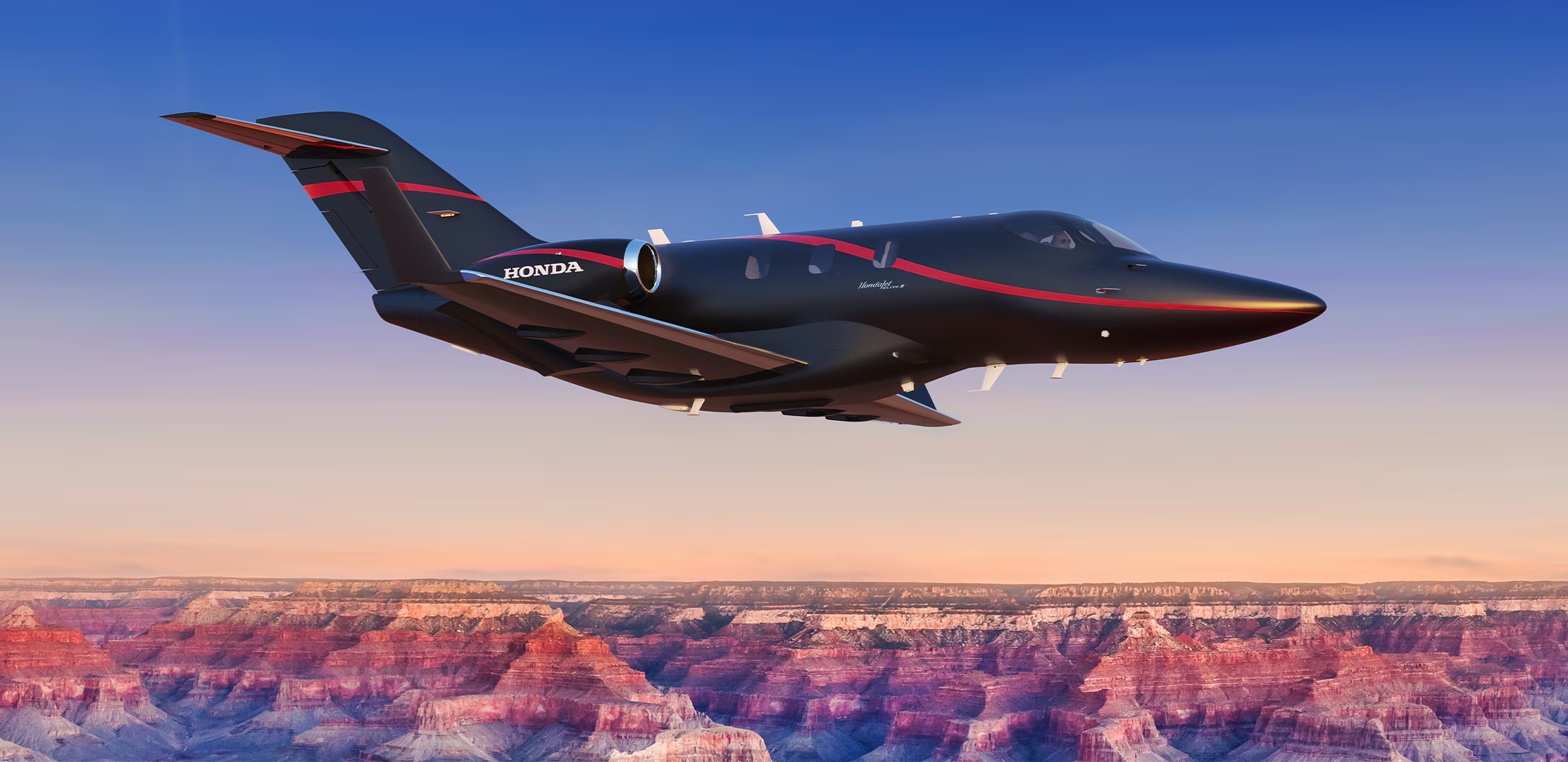
In private aviation, heritage names tend to dominate the conversation. That’s what makes Honda Aircraft Company so interesting. It didn’t grow out of an old aerospace dynasty. It came from Honda Motor Co., Ltd. — a company better known for engines on roads than in the sky. And yet, that outsider perspective may be exactly its advantage.
When HondaJet first appeared, the over-the-wing engine design raised eyebrows. Engines mounted above the wings? It looked different, almost disruptive. But spend time understanding the logic behind it, and the decision feels less like a styling statement and more like a practical one. The configuration reduces drag, lowers cabin noise, and frees up usable space inside. In a category where every inch matters, that’s not cosmetic — it’s meaningful.

The HondaJet Elite II represents the most polished version of this thinking. Its 1,547-nautical-mile range makes it ideal for regional business routes, while its Garmin-based cockpit keeps the workload manageable for pilots. Inside, the cabin doesn’t try to overwhelm with excess. Instead, it feels considered: clean lines, quality materials, a layout that makes sense. There’s also FAA-certified Emergency Autoland — a feature that adds a layer of reassurance that many owners quietly appreciate.
Looking ahead, the HondaJet Echelon signals broader ambition. Designed to move into the super-light segment with transcontinental capability, it suggests Honda is ready to compete beyond the very light jet category — but on its own terms.

What stands out most about HondaJet isn’t drama. It’s clarity of purpose. The brand doesn’t rely on nostalgia or spectacle. It leans on engineering, efficiency, and thoughtful design choices that reveal themselves over time.
In a market often driven by prestige alone, HondaJet offers something subtly different: credibility earned through function. And in aviation, that may be the most convincing luxury of all.
Read more AVIATION articles HERE